
01 · Choose Technology
Pick Your Display and Foil Model
Select the size and type of touch foil to match your display concept—combine with a rear-projection film and projector, or an LCD or LED screen, based on your project’s setting and needs.
Transform your Philadelphia storefront or venue with interactive touch foil technology on glass.
Philadelphia thrives on innovation, from high-traffic retail downtown to cultural and historical destinations across the city. With TouchFoil, you can bring next-generation touch interaction to glass surfaces—right inside your windows, kiosks, walls, or tables—creating compelling digital experiences even in a busy urban environment.
TouchFoil is a transparent, plug-and-play film that mounts discreetly inside glass or acrylic. Designed for integration with rear-projection film, projectors, or LCD/LED screens, it enables multi-touch functionality through the glass without altering the exterior. With Philadelphia’s blend of historic buildings and contemporary venues, TouchFoil provides a powerful solution for dynamic displays, wayfinding, and interactive engagement, all year round.
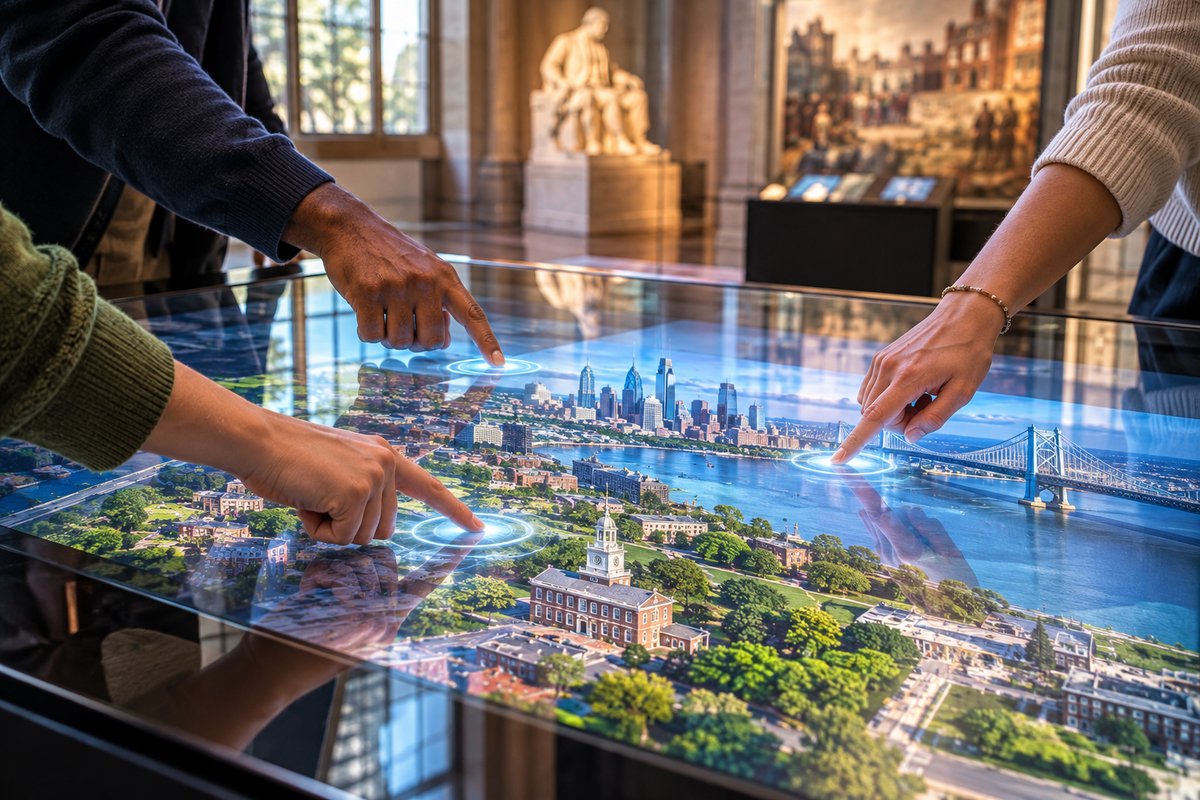
Select the size and type of touch foil to match your display concept—combine with a rear-projection film and projector, or an LCD or LED screen, based on your project’s setting and needs.
After cleaning and preparing the glass, apply the touch foil on the interior side using the wet method, making sure the active area aligns precisely with your digital content area.
Attach the foil’s controller board and USB cable to your computer, secure and ground the controller, calibrate as needed, and set up your interactive content for immediate audience engagement.
Capture attention on vibrant Philadelphia shopping streets by turning glass into a touch-powered digital display that works through any season, inviting passersby to explore, browse, or engage with your brand.
Enhance guest experience at museums near Independence Mall, hotels in Center City, or campus visitor centers by integrating interactive informational panels or wayfinding systems behind glass entryways.
Deploy interactive directories, client greeting stations, or collaborative touch tables in Philadelphia office lobbies and real-estate offices—creating an engaging first impression and a practical user interface.
Use this guide to determine the perfect fit for your glass thickness and available space, especially in historic Philadelphia architecture where custom sizing may be required for unique storefronts or display tables.
Browse available models from ProFoil Standard to Object Recognition and Circular foils to match your organization’s requirements—from small boutique windows to round tables at local museums or event spaces.
Understand installation steps, from glass prep to fine-tuning touch accuracy, ensuring reliability across varied uses from corner cafes to university kiosks in Philadelphia’s diverse environments.
Every project is unique—request a tailored quote for your Philadelphia location, including storefront size and intended interaction type, for a solution that matches your display goals.
Check permit requirements for sign or window-mounted projection installations in Philadelphia, including building and electrical approvals.
Explore local tourism resources for creating visitor-focused interactive displays or wayfinding at Philadelphia attractions, museums, and event centers.
Philadelphia’s retail, hospitality, and educational sectors experience widely varying visitor flows throughout the year. In spring and fall, bustling foot traffic makes dynamic interactive glass displays extra valuable for capturing attention in downtown districts or along South Street. During winter, venues benefit from indoor-facing touch kiosks that invite passersby without opening the window to the elements. Summertime events, pop-up shops, and open-air festivals can use interactive windows or tables for interactive schedules and ticketing, always with the foil securely installed from the inside.
Historic and modern buildings co-exist throughout Philadelphia, requiring flexible solutions that work with atypical glass sizes or storefront configurations. TouchFoil can be adapted to fit historic shop windows, university campus centers, or contemporary hotel lobbies, always maintaining the architectural integrity of the existing space while introducing modern interactivity.
Cultural districts—such as those near the Parkway or Independence Hall—see strong visitor demand for informational kiosks, wayfinding, and digital exhibits. TouchFoil systems can elevate these spaces without external hardware or altering the building exterior, making them attractive for museums, galleries, or city visitor centers planning for year-round engagement.
Every touch foil installation requires careful planning for power and compliance with local building and electrical codes. All wiring for the controller and any supporting display or projector equipment must be held to Philadelphia’s building standards. Especially in mixed-use properties or public venues, consult with city permitting offices early in your project to determine if your installation will need any building, zoning, or electrical permits.
Provision for grounded power is critical, as correct grounding protects both users and equipment. Plan for secure controller placement so that it can be reliably fixed to the display frame and grounded. When integrating the foil with other AV components or networking hardware, use shielded cabling and maintain proper separation according to best practice guidelines.
Environmental considerations matter for downtown and historic districts—choose glass that is clear, untinted, and without metallic coatings for the best touch accuracy. If using laminated glass, ensure there’s no air gap that could affect touch response, and always keep the metal at least 3 mm away from the active area. If installing at a location with heavy winter condensation or temperature swings, verify that the installation area remains dry and climate-controlled for electronics longevity.
Choosing the wrong glass can prevent your display from working: metallic films, privacy coatings, or even some insulated units may block the touch signal. Always speak with your glass provider or a project engineer about the makeup of your existing window before ordering touch foil.
Another common error is underestimating the importance of precise alignment and testing. Once installed, the foil cannot be repositioned—use temporary alignment guides and thoroughly test device function with your content and hardware prior to wet mounting.
Permitting challenges can also delay Philadelphia projects if sign or electronics permits are overlooked. Start the permitting process as soon as you know your project scope and location, relying on local resources for up-to-date requirements.
Inadequate cable routing is a frequent issue, especially in older buildings with tight utility spaces. Always plan your runs to keep USB/data lines away from high-voltage power or display cables to ensure optimal touch accuracy and minimal interference.
Touch foil uses a transparent grid of sensing wires laminated onto the inside of glass or acrylic. When a finger touches or nears the outside surface, the foil’s sensors detect the location and translate it to touch input, even though the user never touches the actual hardware. The foil, controller, and USB cable create a plug-and-play connection to your computer. This enables interactive digital content through a barrier without exposing electronics to the outside.
Touch foil can be installed at retail storefronts, museums, hospitality venues, visitor centers, offices, real-estate lobbies, and more—anywhere there is a non-metallic glass or acrylic surface accessible to users. It is ideal for high-traffic districts like Center City, cultural campuses, and university settings where digital interactivity is needed without altering building exteriors.
Touch foil can be used with either a rear-projection setup—utilizing rear-projection film and a projector behind the glass—or with standard LCD or LED flat panel displays. Both methods enable clear, interactive visuals for users on the opposite side of the glass.
Yes, the glass must be clean, free of dust or oils, and contain no metal or metallic coatings. During installation, a wet method is used to apply the foil and remove air bubbles. If your glass is insulated, laminated, or unusually thick, consult with your provider to ensure compatibility. Proper preparation is essential for long-term touch accuracy.
Some installations, especially those involving window-mounted signage, projections, or electrical components, may require building, zoning, or electrical permits in Philadelphia. Requirements are project-specific, so it’s important to consult the city’s permitting office ahead of time to ensure all approvals are in place before you begin installation. See the listed local permitting guide for more details.
Every TouchFoil product comes with a 3-year warranty on the foil and a 1-year warranty on the controller. All models are CE and RoHS compliant. If you have project-specific concerns or requirements, you can request more details as part of your custom quote.