
01
Define Your Display Vision
Decide which window, wall, or surface you want to turn interactive. Measure and photograph the area, and consider if you’ll use an LCD/LED screen or a projection setup behind your glass.
Bring dynamic, interactive touch screens to any glass in Salt Lake City with SSI TouchFoil’s transparent technology.
Salt Lake City venues, from historic downtown storefronts to innovative museum spaces and contemporary office buildings, can now add interactive functionality to any glass surface. TouchFoil from Screen Solutions International (SSI) empowers designers and property owners throughout the city to create engaging, multi-touch displays through windows, kiosks, tables, and walls—all while preserving the original look of their glass.
Installed on the inside of glass or acrylic, TouchFoil turns nearly any pane into an interactive digital surface. Whether you’re modernizing a retail window for year-round tourism, upgrading a hotel lobby for tech-forward guests, or equipping an educational space with interactive displays, TouchFoil adapts to both seasonal foot traffic and architectural trends in Salt Lake City’s active cityscape.
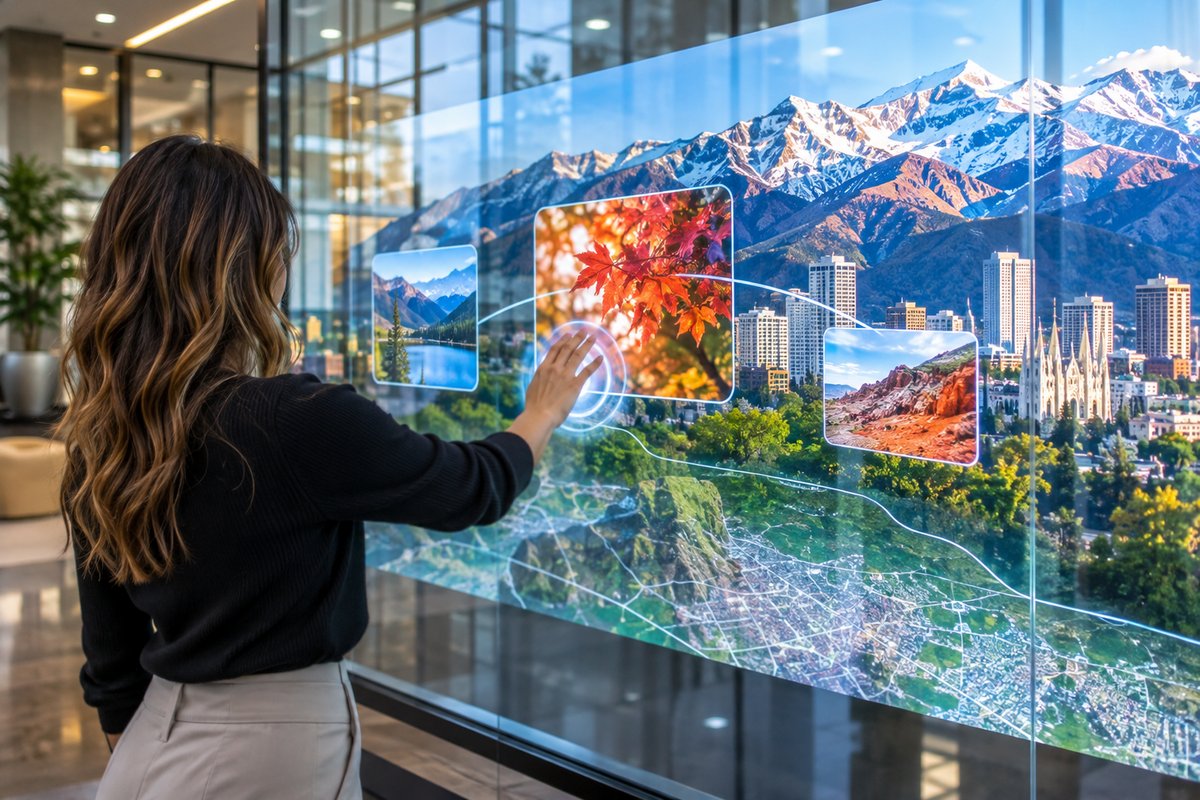
Decide which window, wall, or surface you want to turn interactive. Measure and photograph the area, and consider if you’ll use an LCD/LED screen or a projection setup behind your glass.
Visit the Get a Touch Foil Quote page to submit your project specs. SSI will match you to the right ProFoil model and size, tailored for your glass type and intended use.
Review How Touch Foil Works and How to Install It for preparation, conditioning your glass and integrating it with your display hardware. Check for permits as needed in Salt Lake City.
Turn retail windows into interactive displays that attract shoppers and share information year-round, even during seasonal events like the holiday lights tour.
Install touch tables or wall-mounted displays in museums, visitor centers, and event spaces to engage guests with digital wayfinding, maps, and multimedia content.
Enhance hotel, university, or real estate office lobbies with internal touch walls or room directories that are easy to access and maintain.
View all available sizes and technical details here—choose the best fit for Salt Lake City’s older brick storefronts, new developments, or glass-heavy lobbies.
Select ProFoil Standard for basic interactive windows, Pro Touch 20/40 for larger or multi-user setups, Object Recognition for museum applications, Clear for fully transparent needs, or Circular for round tables.
See step-by-step visuals and setup instructions tailored for glass conditions common in Salt Lake City interiors, including tips for alignment and safety checks.
Every project is unique—get an accurate quote fast so you can plan your display upgrade with confidence and comply with local expectations.
Check local requirements to see if your interactive display installation behind glass needs a building permit.
Learn about top events and visitor flows to identify key areas for interactive windows and digital signage.
Salt Lake City’s seasonal diversity—with cold snowy winters, bright springs, and lively summer festivals—means public spaces and glass facades play a big role year-round. Take into account whether your interactive storefront window or table will face direct sunlight or changing weather outside, even though the foil always mounts to the inside. In retail and event venues, south- and west-facing windows receive the strongest sun; these may benefit from LCD screens to maintain image visibility through daylight hours.
Museums and academic lobbies often have controlled light and temperature indoors, offering ideal, stable settings for projection-based touch tables or exhibit displays using Object Recognition foils. Conversely, older buildings with original glass require careful measurement and a check for any embedded metal, especially if upgrading for the holiday shopping season or major tourist events.
Spaces with high seasonal foot traffic—like locations near Temple Square or ski event venues—should consider the foil’s touch accuracy and durability. Planning ahead for event surges lets you calibrate your system for consistent interactivity.
If your use case serves public visitors, design for accessibility: choose foil sizes and screen heights that accommodate different ages and abilities, and keep high-touch surfaces easy to clean year-round.
Salt Lake City requires building owners and installers to check municipal rules before permanently adding or modifying digital displays behind glass. Permit needs depend on screen size, placement, and whether the upgrade affects structural or electrical systems; see the recommended local link for easy permit research.
For any TouchFoil installation, always use grounded power and ensure USB cabling from the controller is routed away from main power and display cables to minimize interference. Mount the controller where it can be secured and grounded to the frame or mounting structure.
When integrating with projection film and projectors, keep ventilation needs and service access in mind—projectors inside window displays may need periodic cleaning, especially in Salt Lake City’s urban downtown. For public-facing systems in lobbies or visitor centers, work with your facilities or engineering team to check for ADA compliance and cybersecurity in networked interactive displays.
Never attempt to install TouchFoil on outdoor glass, and always test the setup with your actual content and glass before making a permanent installation. As every project and venue is unique, check with local offices regarding any specific fire, accessibility, or electrical requirements.
A common mistake is mounting the foil on glass with hidden metal or in frames with metal too close to the active area; this can impact touch accuracy. Thinner, non-metallic glass results in the best performance; always confirm your glass type before ordering.
Improper cleaning or moisture during installation can trap bubbles or leave contaminants under the foil. Ensure the surface is perfectly clean and use the recommended wet-application approach, squeezing out all liquid and bubbles, then allowing 24–48 hours for full adhesion.
Another pitfall is failing to ground the controller or placing USB data cables too close to power or video lines, leading to potential interference. Plan cable routes in advance and secure connections for stable performance.
Finally, avoid trying to reposition or move the foil after installation—it is designed for one-time use only. Test your setup thoroughly in the exact spot, with aligned active area and display, before permanent adhesion.
TouchFoil is designed for use on a wide range of glass or acrylic surfaces, including modern curtain-wall windows and older storefronts, as long as the glass contains no metal and meets thickness criteria for your chosen model. Always consult with your property manager or building services to verify glass composition, especially in historic districts or commercial renovations.
TouchFoil supports two main configurations: it can be used with LCD or LED screens for bright, vivid displays in sunlit shops or offices, or integrated with rear-projection film and a projector for controlled lighting conditions such as museums or galleries. Consider local lighting and privacy needs and choose the hardware accordingly.
Each TouchFoil includes a 3-year warranty on the foil itself and a 1-year warranty on the controller. Products are CE and RoHS compliant, providing peace of mind for long-term use and regulatory compliance in public environments.
The foil is wet-applied to the inside of the glass after thorough cleaning. Once installed and dried for 24–48 hours, it remains firmly fused and cannot be removed and reused elsewhere. Always test alignment and function before permanent installation, as repositioning may damage the foil.
Permit requirements depend on the size and placement of your display, as well as local building codes for public-facing installations. Check with Salt Lake City’s online permit system or local building department to determine if your upgrade will need approval. Internal installations visible from outside may still fall under sign or safety ordinances.
No, all TouchFoil models are designed only for mounting to the inside surface of glass or acrylic. This protects the touch sensors and controller from weather, vandalism, and temperature extremes typical in Salt Lake City’s climate.