
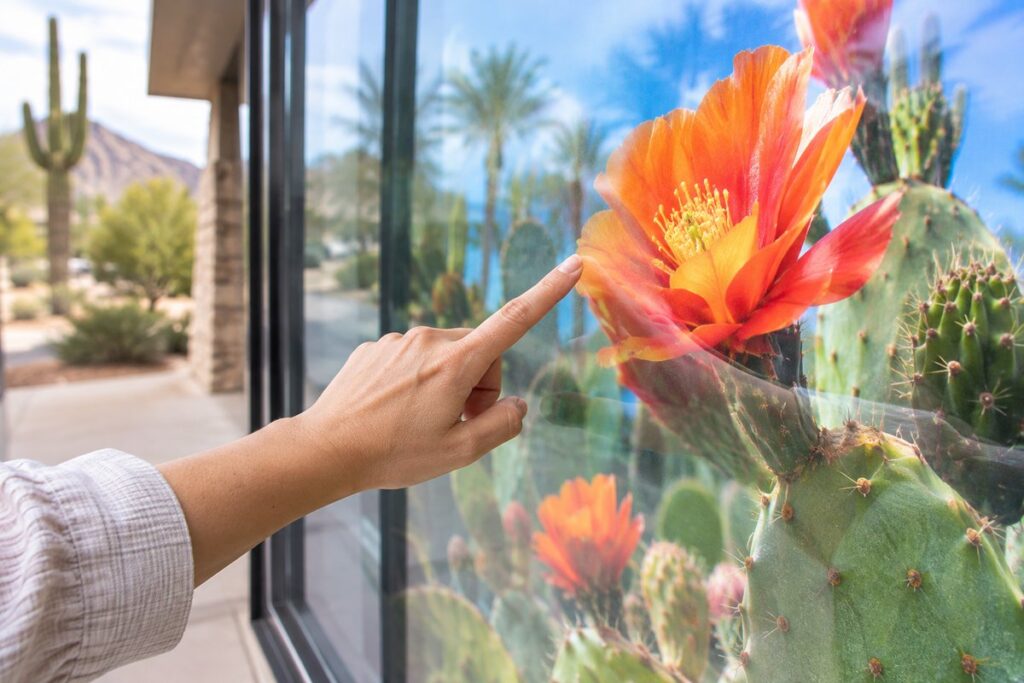
What Is Touch Foil? Turning Glass Into Interactive Screens
Touch foil is a transparent film engineered with a fine grid of sensing wires, designed to turn any standard glass or acrylic surface into a responsive multi-touch screen. When mounted on the inside of a storefront window, hotel lobby partition, museum exhibit case, or a tabletop, touch foil instantly adds an interactive layer. This technology detects touch through the glass, allowing engagement with digital content while preserving the integrity and aesthetics of your original glass installation. No visible wires appear with models like ProFoil Clear, maintaining a seamless experience.
Touch foil is available from TouchFoil, which offers a range of solutions suitable for Scottsdale retailers, institutions, and designers seeking dynamic and engaging interactive displays. Whether you’re interested in an interactive storefront window, kiosk, touch table, or glass wall, touch foil enables precise, responsive input directly through glass up to 12 mm thick, depending on the chosen model.
If you’re exploring technology to revamp your Scottsdale location—shopping districts, museum atriums, office receptions, or education centers—understanding touch foil’s capabilities and installation requirements can help ensure your project’s success.
How Touch Foil Works: The Tech Behind Interactive Glass
Touch foil operates by sensing electrical changes when a finger or recognized marker puck approaches the surface of the glass. The core of touch foil consists of a transparent film embedded with a precisely engineered sensing grid. This grid, invisible with some models, is sensitive enough to detect multiple simultaneous touches through glass, while still allowing high levels of light to pass through—generally over 89 percent, with ProFoil Clear at 85 percent or more.
Every touch foil kit includes the film itself, a compact controller board, and a USB cable. The system is plug-and-play, powered by 5 V over USB, and conveniently connects to a computer. The foil is mounted on the interior side of the glass, keeping it protected and preserving a clean outward appearance. Responsiveness is fast, typically under 10 ms, with touch accuracy of approximately ±2 mm—or less than 1 mm for Object Recognition models.
To explore more details on operation, models, and the differences in touch point capabilities, visit the Touch Foil Models page and review the installation overview at How Touch Foil Works and How to Install It.
Designing an Interactive Storefront or Kiosk: What Goes Behind the Glass
Transforming a storefront or lobby into an interactive experience requires more than just touch foil. The other side of the glass must host a visual display—either an LCD/LED screen or a projector system with rear-projection film. For Scottsdale’s retail and hospitality environments, clarity and brightness are crucial, especially in high-traffic, sunlit spaces.
Common setups include:
- Touch foil + glass + LCD or LED display + computer (for vivid images and standard touch screen applications)
- Touch foil + glass + rear-projection film + projector + computer (for large-scale, seamless visuals)
When selecting the appropriate combination for your project, consider available space, lighting conditions, and existing infrastructure. Rear-projection film options for pairing with projectors are available at SSI’s sister site. Always plan for accessibility and security, especially in public-facing windows or interactive kiosks.
Review available sizes and integration options for your project at the Touch Foil Sizes and Specifications page.
Planning Glass Thickness and Sizing for Touch Foil
The choice of glass is a critical factor for system responsiveness. Touch foil is designed for specific glass thicknesses—typically up to 10 mm for most models and up to 12 mm for ProFoil Pro Touch. Thinner glass generally provides better touch accuracy, so use the minimal thickness necessary for your installation’s safety and security requirements.
It’s important that the glass contains no metal, which could interfere with the foil’s operation. Any surrounding metal components should be kept at least 3 mm away from the active area. Laminated double glass can also be used with select models (like Pro Touch 20/40), as long as there is no air gap between panes.
When planning a large interactive storefront for Scottsdale’s shopping or entertainment districts, custom sizes are available up to 1.4 x 4.5 meters. For specific panels—such as for touch tables or domes—the Circular Touch Foil model supports diameters up to 140 cm per half, joining to form up to 280 cm. Check the detailed product options at Touch Foil Sizes and Specifications.
Installation Tips: Ensuring a Reliable Interactive Experience
Touch foil installation is a precise process to help ensure best performance. The film is always mounted on the inside of the glass using a wet-application technique. The installer first thoroughly cleans the glass, aligns the active area of the foil to match the display edges, and uses a squeegee to remove water and air bubbles. The system requires 24 to 48 hours to dry fully, and the foil cannot be repositioned, so test thoroughly before final adhesion.
The controller should be securely mounted and grounded to the physical frame, and USB cables must be routed away from power and display cables to minimize electrical interference. The touch system functions best on glass without metallic content; consult your glass supplier or local resources as needed. Scottsdale’s climate means displays may experience significant temperature fluctuations, so consult with engineering or AV teams when integrating the system into sun-exposed glass.
If your installation requires infrastructure changes, such as electrical work or modifying structural glass elements, refer to the Planning and Permitting Portal of the City of Scottsdale for building permits and approvals.
Integrating Touch Foil in Scottsdale: Permits, Lighting, and Local Planning
For any permanent installation in a commercial or public space in Scottsdale, compliance with local building and signage codes is critical. Interactive storefront windows and large glass touch tables may qualify as commercial signage or building modifications, so check your project requirements at the Planning and Permitting Portal. Factors such as power supply routing, equipment accessibility, and public safety must be addressed in your application.
Lighting conditions in Scottsdale can be intense, especially for window installations facing direct sunlight. Balance display brightness and glare control for best visibility, working with your AV integrator to pair the right LCD, LED, or projection technology behind the touch foil. Monitor the spacing between glass and metallic signage or frames to avoid touch interference.
For installations designed to engage Scottsdale’s active visitor population, especially in downtown districts or near major attractions, coordinate with business improvement districts and refer to the Official Travel Site for Scottsdale, Arizona for tools and data on visitor trends and branding initiatives.
Selecting the Right Model: ProFoil Options for Every Project
TouchFoil’s ProFoil lineup offers options to match most commercial, educational, and creative requirements in Scottsdale. ProFoil Standard supports up to 10 point touch through glass up to 10 mm thick, suitable for retail windows and kiosks between 10 and 55 inches. ProFoil Pro Touch 20/40 expands capabilities for larger format glass (up to 100 inches), up to 20 or 40 touch points, and works on laminated double glass with no air gap. It features zone calibration and the 40-point version can work with macOS for supported uses.
Where object interaction is needed—such as educational marker recognition or interactive exhibits—ProFoil Object Recognition identifies pucks placed on glass, supporting over 40 touch points with high accuracy. ProFoil Clear provides 10 touch points without visible sensing wires, while the Circular Touch Foil fits round touch tables and domes up to 2.8 meters in diameter.
Every system is CE and RoHS compliant. The foil is backed by a 3-year warranty and the controller by a 1-year warranty. For complete sizing and technical data, explore the sizes and specifications resources. For integration with AV setups or innovative exhibit builds, review designs in collaboration with your system integrator or project architect.
Practical Steps for an Interactive Storefront: Checklist for Scottsdale Projects
- Define your goals: retail engagement, visitor information, educational display, or entertainment.
- Measure your available glass area and identify the best size and model for your goals.
- Choose a display system (LCD/LED or projector with rear-projection film) compatible with your space and ambient lighting.
- Confirm the glass composition, thickness, and absence of metal or coatings that could interfere with touch.
- Plan controller placement, allow for USB routing, and ensure grounded power is available.
- Coordinate with Scottsdale’s permitting process at the city portal for required approvals.
- Work with an AV integrator, exhibit builder, or designer for seamless installation and integration.
- Leverage local branding resources at the Official Travel Site for alignment with district initiatives or public events.
By following this checklist, Scottsdale businesses and cultural institutions can create powerful, interactive experiences that attract both locals and visitors alike.
FAQ: Touch Foil for Scottsdale Interactive Projects
How durable is touch foil in high-traffic environments?
Touch foil is always installed on the inside face of the glass, so the film is protected from direct contact and potential abrasion. For locations with heavy visitor traffic, choose tempered or laminated glass where needed, and ensure the glass is securely mounted to withstand public use. Glass maintenance remains the same as with a standard installation.
Can touch foil be used on outdoor-facing windows?
The touch foil is designed to be placed on the inside of a window or glass panel, behind the glass itself. The technology senses touch through the glass, so public-facing, outdoor windows are supported if the interior can accommodate the film and required hardware. Always verify that your space can provide climate-controlled, protected surfaces for the foil and associated electronics.
What is the process for getting a custom size touch foil?
Custom sizes are supported for installations up to 1.4 x 4.5 meters. All touch foil solutions are priced per project, so review your measurements and requirements, then get a quote to discuss options and receive specifications tailored to your needs.
Getting Started: Next Steps for Scottsdale Businesses and Designers
For retailers, institutions, and designers in Scottsdale, touch foil offers the flexibility to transform almost any glass surface into a vibrant interactive touch screen. From engaging interactive storefront windows to innovative kiosks and exhibit touch tables, this technology enhances both customer and visitor experience. It’s important to plan thoroughly—from glass selection and display integration to compliance with local permitting processes. Explore detailed solutions, compare options, and plan your installation by visiting the TouchFoil site. Ready to discuss your specific Scottsdale project?
to receive a tailored recommendation for your requirements.