
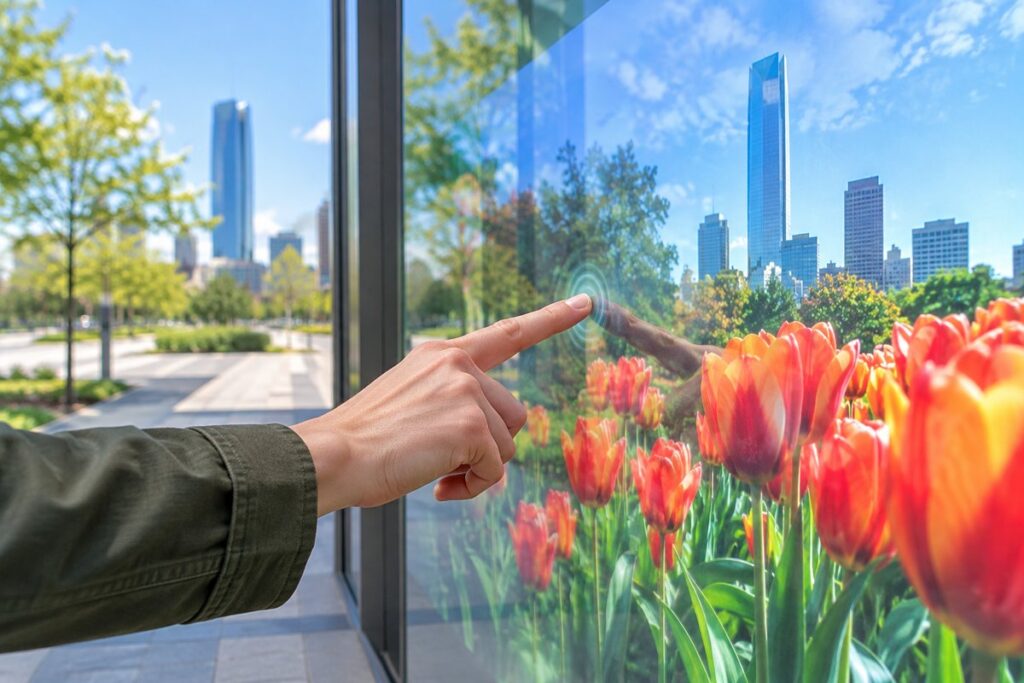
Introducing Touch Foil: Transforming Glass into Interactive Experiences
Touch foil technology is changing how Oklahoma City retailers, museums, hotels, and public spaces deliver dynamic visual interactions. With a simple, transparent film, known as a touch foil, ordinary glass or acrylic can instantly become a fully interactive touch screen. Whether you’re revamping storefront windows on Bricktown’s bustling Main Street, adding interactive visitor kiosks at a museum, or creating touch tables for conference venues, understanding what touch foil is and how it works is the first step to successful implementation.
The core of this technology is a clear film, such as ProFoil from TouchFoil (on the SSI platform at touchfoil.us), embedded with an extremely fine grid of sensing wires. This film, always mounted on the inside of glass, can sense touches and gestures through the glass, making the interaction seamless and intuitive. In Oklahoma City’s climate and active business environment, this indoor installation method protects sensitive electronics from outdoor elements while inviting passersby to engage with digital displays without ever opening a door.
Because touch foil overlays are invisible or nearly so—especially in the ProFoil Clear model—they maintain your visual branding and store aesthetics. This guide will show how touch foil works, what goes behind the glass, planning tips specific to Oklahoma City, and best practices for size, glass selection, and local permits.
How Touch Foil Works: The Technology Explained
At the heart of every interactive glass display is a touch foil, a transparent film embedded with a grid of sensors. When installed on the inside of glass or acrylic, the foil senses the precise position of fingers through the pane. The film connects via a plug-and-play controller and USB cable, drawing power from any standard USB port at 5 V. With models supporting up to 40 simultaneous touch points, these systems support everything from basic navigation to advanced multi-user collaboration.
Installation always happens on the interior side of glass, protecting the foil from weather and physical tampering. The film offers up to 89 percent light transmission (at least 85 percent for ProFoil Clear), ensuring your display remains bright and colors pop through the touchscreen. With a response time under 10 ms and accuracy of about plus or minus 2 mm (even finer on Object Recognition models), users experience intuitive and immediate interaction—even through glass up to 12 mm thick in advanced versions.
For more technical details such as sizing options and model differences, see the Touch Foil Sizes and Specifications and Touch Foil Models pages. These resources explain which foil meets the needs of your project, from small in-window kiosks to giant interactive video walls for Oklahoma City lobbies and retail environments.
Building Interactive Glass Displays: What Goes Behind the Foil
Touch foil by itself is not a screen—the real magic happens when you place a digital display directly behind the glass. There are two main ways to create an interactive touch experience:
- Foil + Glass + Rear-Projection Film + Projector: Here, a projector and specialized rear-projection film combine to create brilliant images visible through the touch foil. This is ideal for large storefront windows, museum exhibits, or installations where you want edge-to-edge visuals.
- Foil + Glass + LCD/LED Display: Commercial LCD or LED displays, placed just behind the glass and foil, create high-definition interactive content. This approach is suitable for interactive kiosks, touch tables, and smaller indoor or semi-outdoor setups where ambient light may be high.
The selection between these two configurations depends on your space, lighting, desired display size, and interactivity goals. In either scenario, a computer or media player runs the interactive content, connecting to the system via USB for touch input.
For integration help, review How Touch Foil Works and How to Install It, which offers a practical rundown for installers and integrators working in Oklahoma City’s varied venues.
Choosing Glass and Planning for Oklahoma City Conditions
Glass selection is fundamental to delivering a responsive interactive touch screen. When planning your installation in Oklahoma City—whether it’s a downtown business or a visitor center at a local attraction—keep these guidelines in mind:
- Glass Thickness: Thinner glass enhances touch sensitivity. Most touch foils support up to 10 mm glass thickness (Pro Touch 20/40 supports up to 12 mm, including laminated double glass with no air gap).
- No Metal Elements: The glass must be free of metallic coatings or wires, and any metal hardware, rebates, or frames should stay at least 3 mm from the foil’s active area to prevent signal interference.
- Preparation and Installation: The foil installs via a wet-application method on meticulously clean glass, with air and water bubbles removed and a drying period of 24–48 hours before use. This is a permanent, one-time installation—test your system fully before application.
Projects in Oklahoma City often require compliance with local building and sign codes. Refer to the city’s official permits page for guidance before starting renovations or window modifications. Consider humidity, heat, and sunlight exposure in your specific location, as these may affect not the foil but the display or projector behind it and overall system performance.
Sizing and Selecting the Right Touch Foil for Your Needs
Touch foils are available in a diverse range of sizes, supporting custom applications from small countertop kiosks to expansive video walls. Several ProFoil models address different scale and performance needs:
- ProFoil Standard: For typical retail and informational displays, available in 10.1 to 55 inch sizes, supporting up to 10 simultaneous touch points, through glass up to 10 mm thick.
- ProFoil Pro Touch 20/40: Designed for larger interactive windows and public collaboration spaces, handling 20 or 40 touch points, through up to 12 mm of glass with zone calibration, in sizes from 10.1 up to 100 inches. The 40-point model supports Mac multi-touch where macOS supports it.
- ProFoil Object Recognition: For interactive educational tables and collaborative museum exhibits, supporting 40+ touch points and marker pucks for object detection, with SDK options for tailored applications.
- ProFoil Clear: Combines full transparency (no visible wires) with 10 touch points, for dramatic effect in premium glass-fronted environments.
- Circular Touch Foil: Specially designed for large round tables and domes, with up to 140 cm active diameter, expandable for larger surfaces.
You can find full details, including dimensional limits and model features, on Touch Foil Sizes and Specifications. Custom sizes up to 1.4 x 4.5 meters are available, opening up creative options for unique display spaces across Oklahoma City’s diverse architecture.
Electrical, Grounding, and Safety Considerations
Interactive glass displays require careful attention to electrical safety and interference control. All touch foils from TouchFoil are CE and RoHS compliant. To maximize reliability and safety in Oklahoma City retail and public settings, ensure that:
- The controller board is securely fixed and grounded to a metal frame or case where possible.
- The USB cable that powers the controller is routed separately from mains power and high-voltage display cables to reduce signal interference.
- Only grounded power sources are used for all connected components.
Some sites, especially in public areas or when integrating with historical or landmark buildings, may require consultation with local permitting authorities. To check requirements, see the Oklahoma City permits portal. Safety and reliability are especially critical in high-traffic spaces, including schools, museums, and hospitality venues.
Light levels can vary enormously from the Oklahoma River to Midtown and the Plaza District. If you’re unsure about display brightness or glass choices under varying lighting, review examples on TravelOK.com to anticipate visitor flow, sun exposure, and indoor/outdoor transitions in tourism settings.
Applications for Oklahoma City: Retail, Education, Hospitality, and More
Touch foil interactive glass is creating new possibilities for engagement across Oklahoma City:
- Interactive Storefront Windows: Attract and engage customers after hours with window-mounted displays that respond to touch without opening the building.
- Touch Tables and Digital Kiosks: Museums and visitor centers can create collaborative tables for mapping, history, or art exploration, giving guests a tactile way to experience content.
- Wayfinding and Information Points: Digital directories in hotels and corporate lobbies provide a modern, hygienic means for visitors to navigate properties and services through interactive glass panels.
- Educational Spaces: Classrooms and universities can install interactive glass for teaching, demonstration, or even object recognition projects with the right model.
AV integrators and exhibit builders can take advantage of custom sizing and the flexibility to place content where it best serves Oklahoma City audiences. For more on how to specify and use these products, the complete line of options is available on Touch Foil Models.
Permits and Local Regulations for Interactive Displays
Before beginning any interactive glass screen project in Oklahoma City, review city requirements regarding building, signage, and electrical installations. Interactive window and wall displays may fall under multiple code categories—especially if altering storefronts, mounting hardware, or routing cables in public areas.
The City of Oklahoma City offers guidance through its Permits Office. It is always advisable to plan projects around city guidance and gain any necessary approvals before construction. Consider collaborating early with property managers and local electricians familiar with city permitting practices to avoid project delays.
For venues with high visitor traffic or special historical status, fitting your display to meet both display needs and preservation guidelines can open opportunities to leverage Oklahoma’s tourism appeal. Browse TravelOK.com for inspiration on high-traffic locations, festivals, and hospitality needs that interactive glass displays can enhance.
FAQ About Touch Foil in Oklahoma City
How do I choose the right Touch Foil model for my window or table?
The ideal model depends on display size, the number of touch users, glass thickness, and your goals—whether for normal retail interactivity, tables with object recognition features, full transparency requirements, or round surfaces. Consult the sizes and specs page and model overview for the best fit.
Can the Touch Foil be repositioned or moved after installation?
No. Touch foil is a one-time install, permanently bonded to its glass or acrylic sheet after wet application and curing. Always finalize design and test layout before permanent installation to avoid waste.
Are special permits required for touch screens or interactive displays in storefronts?
Requirements depend on project and location. Modifying storefronts, electrical wiring, or installing digital signage may need permits. For the latest and most accurate information, consult the Oklahoma City permits resource.
Get Started: Next Steps for Your Oklahoma City Project
Touch foil brings an exciting, interactive layer to glass displays across Oklahoma City, supporting business, education, tourism, and public engagement. With careful planning around local codes, glass selection, model choice, and installation details, interactive glass can deliver lasting value and engagement in any space.
If you’re ready to spec your project or get professional input, Get a quote from TouchFoil. Each project is custom-quoted to ensure the right solution for your application.
- TouchFoil: Company overview
- Touch Foil Sizes and Specifications: Detailed technical data
- Touch Foil Models: Complete product range
- How Touch Foil Works and How to Install It: Integration and application info
- Get a Touch Foil Quote: Start your custom project
- Permits | City of OKC: For local approvals and construction guidelines
- TravelOK.com – Things To Do in Oklahoma: Visitor behavior and tourist venue inspiration