
01 · Plan
Select Your Venue and Glass
Choose a glass or acrylic surface inside your storefront, lobby or exhibit where you want interactivity. Ensure the glass is free of metal and has enough access for safe installation.
Transform storefronts and public spaces in New York, NY with fully interactive glass powered by ProFoil touch foil.
In New York, NY, where vibrant street life meets modern technology, glass is more than just a view—it’s a canvas for innovation. With TouchFoil’s transparent film, any storefront window, lobby divider, or exhibit surface can become a dynamic multi-touch screen, delivering interactive experiences through glass without altering the building exterior.
Whether you’re creating captivating retail displays near tourist attractions, designing digital directories for luxury hotels, or adding interactive educational platforms in museums, TouchFoil brings touch screen technology directly to glass—without compromising on aesthetics or security. Every installation is custom-quoted, ensuring a tailored fit for your project’s needs and New York’s unique venue requirements.
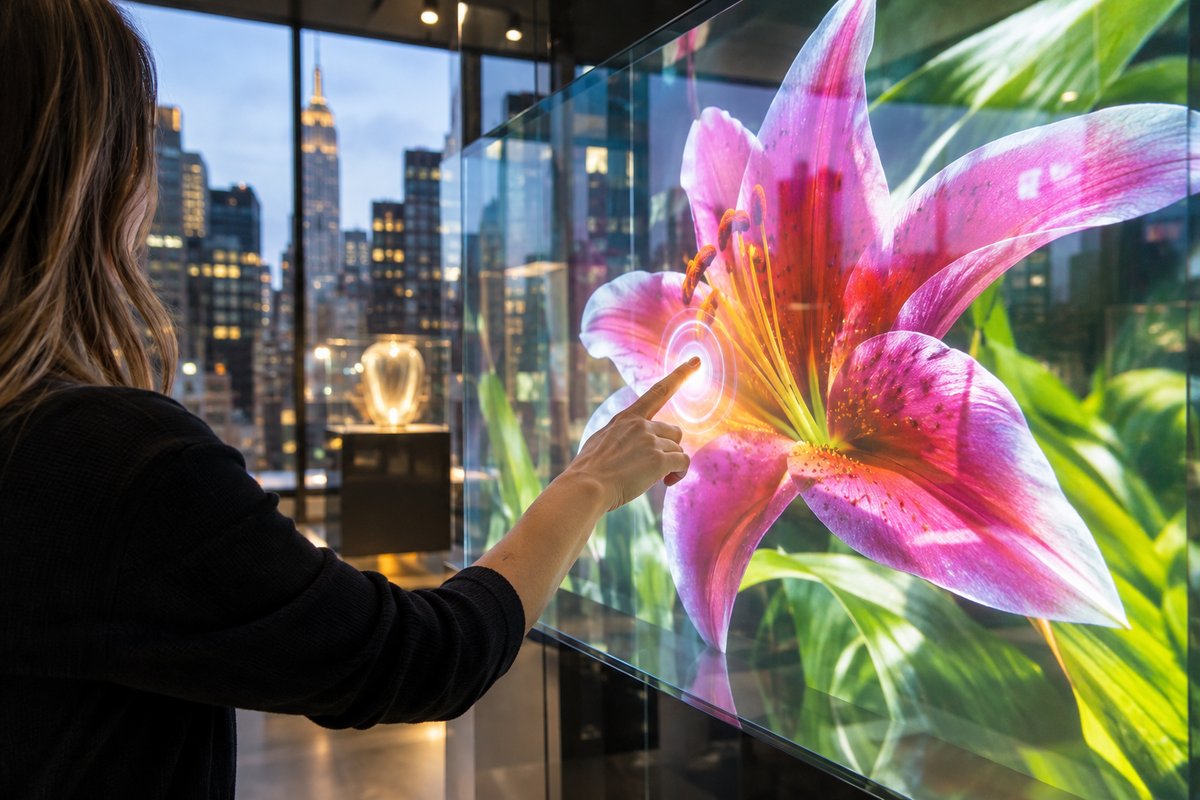
Choose a glass or acrylic surface inside your storefront, lobby or exhibit where you want interactivity. Ensure the glass is free of metal and has enough access for safe installation.
Pair your touch foil with either a rear-projection setup or an LCD/LED display, always mounting the foil on the inside of the glass. Connect the included controller to your computer via USB and ensure all cabling stays clear of power and display cables for best performance.
Carefully wet-apply the foil to perfectly cleaned glass using alignment marks and squeeze out bubbles. Let it dry for 24–48 hours, then power up and calibrate for instant, highly accurate touch response through the pane.
Storefronts in SoHo, Midtown, and around tourist corridors leverage touch foil to invite passersby to browse, interact with product info, join loyalty programs, or access virtual mall directories without having to enter the store.
Museums in Manhattan, educational installations at visitor centers, and high-traffic hotel lobbies employ touch foil for self-guided tours, large-scale interactive maps, and guest check-in aids—ideal for the constant flow of visitors year-round.
Real estate offices, universities, and corporate entryways in New York use interactive glass to create directories, lead capture kiosks and collaborative touch tables, offering advanced digital experiences in limited space.
Explore sizing options to fit unique NYC storefronts or public venue glass. Choose the dimensions that match your application, from compact kiosks to grand lobbies, with custom sizes available up to 1.4 x 4.5 meters.
Select from ProFoil Standard for up to 10 touches through glass up to 10 mm, Pro Touch 20/40 for high-traffic installations with more touch points even on thicker glass, Object Recognition for advanced interactive tables, Clear for fully transparent applications, and Circular for round installations—always considering NYC project demands.
Understand the installation process crucial for compliance in NYC venues: inside-only wet-mount, grounding, and safe USB power are essential for optimal touch performance and longevity.
Every touch foil solution for New York projects is custom-quoted to match the specific glass, space, and usage requirements of your venue. Start your tailored planning here.
Review New York City sign permit guidelines before planning any illuminated or interactive glass installation facing a public street.
Reference local tourism organization resources for visitor traffic data and compliance tips if your glass display addresses public or tourist-facing environments.
New York’s streetscapes and interiors evolve with the seasons—from bustling holiday shoppers on Fifth Avenue to summer gallery nights in the Lower East Side. Touch glass applications take advantage of high foot traffic and ever-changing daylight, enabling retailers and venues to captivate audiences year-round, rain or shine. Interactive glass windows stand out in winter evenings or on rainy spring days, drawing in passersby even when doors remain closed.
For hotels and offices, the ability to present digital directories or welcome screens behind glass offers both hygiene and security—ideal in city environments. Museums and universities benefit from providing hands-on learning experiences without compromising on preservation or public safety, maintaining high interactivity even behind display glass.
Installations adapt to space: smaller touch foils turn compact windows into interactive panels, while custom extra-large foils transform atrium glass or expansive lobbies. Seasonal campaigns, rotating exhibits, and changing tenant needs are supported by robust touch performance that doesn’t require modifying the building exterior.
Whether deployed on a flagship retailer’s window facing Times Square or inside a real estate showroom in Williamsburg, touch foil provides flexible, visitor-friendly, multipurpose engagement tailored to New York’s dynamic venues.
Proper installation of touch foil in New York calls for attention to local electrical codes, reliable power, and strict signage permit standards, especially for illuminated or interactive glass facing public streets. Verify current permit requirements with city officials or your building’s compliance team to avoid delays. Consult the NYC Department of Buildings for any project altering building exteriors or involving backlit displays.
Powering the system is straightforward—only a 5 V USB supply is needed—but safe grounding is vital. Route USB cables away from high voltage or video cables to minimize interference, and secure the foil controller to a grounded metal frame whenever possible for best touch performance.
Since interactive storefronts often run long hours, review your ambient lighting and local operating hours, especially during NYC’s long winter nights or in areas with continuous visitor flow. For public-facing installations, consider integrating rear-projection films for the brightest results, bearing in mind that TouchFoil works on the inside of the glass only.
Work closely with AV integrators or your facilities team when planning electrical or IT aspects. Clarify responsibilities for powering displays, supporting hardware, and ongoing compliance checks for safety and permit renewals.
A successful touch foil project begins with the right glass. Avoid metal oxides or conductive interlayers that can interfere; only install on the inner surface of glass or acrylic, never outdoors. For best touch sensitivity and response times, thinner glass and absence of nearby metal are key.
Calibrate carefully after installation and confirm all touch areas match the display edges—misalignment or residual bubbles from rushed wet-mounting can degrade touch accuracy. Take advantage of the built-in calibration features: ProFoil Standard offers automatic calibration, while zone calibration on Pro Touch 20/40 lets you fine-tune large or multi-zoned panels.
Don’t attempt to reposition a mounted foil; it’s a one-time installation. Prior to final mounting, validate position, performance, and powering using temporary tape or supports. Once installed, drying for 24–48 hours ensures long-term adhesion and reliable operation.
Plan for the NYC environment—consider cleaning schedules for busy public locations, and only use solutions compatible with your foil model. Always check with local code officials for sign or electronic display rules, especially in historic or protected districts.
Touch foil is designed to work on non-metallic glass or acrylic that is accessible from the inside. For best performance, use glass with minimal thickness (ideally under 10–12 mm) and ensure there are no conductive coatings or double glazing with an air gap. Always confirm glass compatibility before purchase and installation, especially in older or custom NYC building windows.
Permits for illuminated, interactive, or altered signage in New York City are regulated by the NYC Department of Buildings. Consult local guidelines and submit applications for any planned modifications facing a public street. Requirements can vary by district and building type, so check with your building management or local code officials during project planning.
Touch foil offers up to 10, 20, 40, or more touch points depending on model, with fast response times under 10 ms and touch accuracy of about ±2 mm (under 1 mm with Object Recognition). It is suitable for busy retail, museum, or event settings where multiple users may interact simultaneously. For best results, regular glass cleaning and adherence to installation steps help maintain responsiveness in high-traffic situations.
Touch foil is wet-applied to the inside of clean glass or acrylic. The installation must be precise, squeezing out all water and bubbles, with a drying period of 24–48 hours. Once mounted, the foil is permanent and not movable to another pane. Routine glass cleaning is advised, taking care to use only non-abrasive methods compatible with touch foil.
Touch foil is compatible with both rear-projection systems (using a projector and rear-projection film) and with LCD or LED displays, provided the setup keeps all hardware inside and away from the foil. Decide based on space, ambient light, and display brightness needs typical for NYC venues, and pair with appropriate playback equipment for your application.
All touch foil solutions include a 3-year warranty on the foil and 1 year on the controller. The products are CE and RoHS compliant. For New York City projects, these standards support reputable integration in commercial and institutional settings. For detailed coverage and technical documentation, request this information when you receive your custom quote.