
01 · Consult
Define Your Project Goals
Assess your space and objectives—storefront appeal, wayfinding, or interactive learning—so project requirements are clear before requesting a quote.
Transform any glass surface into an interactive experience with touch foil, perfect for the vibrant venues and storefronts of Washington, DC.
Washington, DC’s thriving cultural, retail, and corporate scene calls for digital innovation that blends seamlessly with the city’s distinctive architecture. With touch foil technologies from TouchFoil, glass storefronts, museum exhibits, lobbies, and public information kiosks can be upgraded to interactive multi-touch screens—without altering the visual appeal or structural integrity of the glass.
Touch foil is a transparent film installed on the inside surface of glass or acrylic. It senses touch through the glass, enabling interactivity by connecting to an LCD/LED display or a rear-projection system. Whether you’re designing for high-footfall retail, dynamic museums, or landmark hospitality venues during Washington’s bustling event seasons, touch foil brings engagement to windows, kiosks, glass walls, or even custom-shaped surfaces.
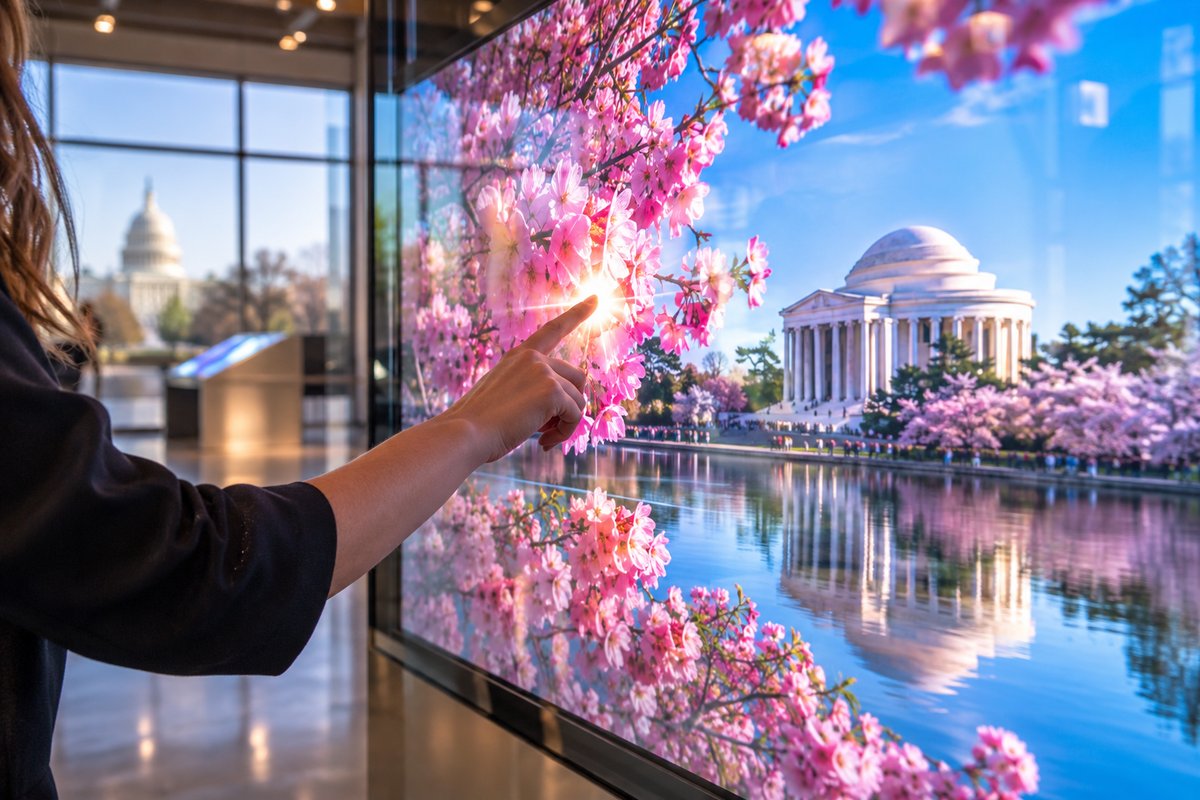
Assess your space and objectives—storefront appeal, wayfinding, or interactive learning—so project requirements are clear before requesting a quote.
Consider size, shape, and number of touch points. Factor in glass type, screen setup, and intended user experience to choose the right model.
Check with Washington, DC’s local building office for any display-related permits, and prepare clean, compatible glass for smooth installation.
Showcase products and engage passersby through your shop window—ideal for shopping districts like Georgetown or along M Street NW.
Create interactive timelines, maps, or exhibits behind glass in Washington, DC’s many museums, visitor centers, and cultural attractions.
Upgrade hotel lobbies, university entrances, and real estate offices for multi-user collaboration or wayfinding—suited for DC’s varied event seasons.
Discover all supported touch foil dimensions—from compact panels to custom sizes suiting large windows or collaborative tables, fitting within historic or modern DC facades.
Compare ProFoil models for the best fit, whether you need 10, 20, or 40+ touch points, object recognition for hands-on exhibits, or a completely clear surface for artful glass installations.
Learn the science behind through-glass touch control, installation steps, and best practices—essential for achieving smooth operation in DC’s variable indoor climates.
Every project is quoted to match your Washington, DC site, dimensions, and user needs—reach out for a proposal tailored to your location and concept.
Review DC’s official permitting process for installing interactive displays behind glass in retail or public-facing settings.
Contact Washington, DC’s official tourism office if your interactive glass display aims to inform, attract, or guide local visitors and tourists.
Washington, DC draws visitors year-round with its iconic monuments, seasonal festivals, and busy commercial districts. During spring’s cherry blossom season, for example, retailers and museums seek window displays and interactive kiosks that attract both locals and tourists without blocking views or natural light. Summer sees increased foot traffic for outdoor markets, while fall welcomes numerous conventions, school tours, and public exhibitions—each offering new opportunities for attention-grabbing digital experiences behind glass.
Touch foil solutions adapt seamlessly to these changing needs. Stores can run dynamic storefront campaigns that respond to local events, while visitor centers provide up-to-date navigation on interactive glass panels. Universities and hotels find value in multi-user lobby tables or information walls, especially during DC’s academic calendar peaks and conference seasons, when clear communication and wayfinding are paramount.
DC’s blend of historic and modern architecture means every installation must respect aesthetic guidelines and work within unique space constraints. Touch foils are unobtrusive once installed, maintaining the original glass finish while also supporting a range of display technologies—making them suitable for both preservation districts and new developments.
Whether you’re designing for high-visibility retail on Connecticut Avenue, hands-on museum exhibits near the Mall, or elegant hotel lobbies in Foggy Bottom, touch foil offers a future-ready solution that’s flexible, interactive, and visually discreet.
Before specifying a touch foil system, check your project’s glass composition—metal-free glass yields the most accurate touch, and glass thickness should match the chosen foil model’s specs. In heritage buildings or older storefronts common in Washington, DC, glass upgrades may be needed, or thinner panes may offer better performance. Always confirm there’s at least 3 mm separation from any metal trims and that grounded power can be safely supplied to the controller.
Power for each touch foil is supplied via USB, keeping installation simple, but careful routing of cables away from AC lines and display wiring ensures reliable signal quality. For commercial venues and public spaces, controller boards should be physically secured and grounded to prevent interference and meet safety standards.
Permitting for interactive displays within DC varies according to location, building type, and project specifics. Glass-mounted foils typically don’t alter a structure, but window reconfigurations, external signage, or large interactive features visible from public spaces could require permits or approval. Refer to local resources for details on application steps, documentation, and timelines, and consult DC’s building department or a licensed architect when planning your display.
For sites targeting tourists or working within high-security areas—such as embassies or government buildings—additional approvals or review of digital elements may apply. Factoring in permits and clearances at the outset ensures your interactive glass project progresses smoothly.
A frequent oversight is misjudging glass compatibility. Glass with embedded metal, mirror backings, or multi-pane construction with an air gap between layers will impact touch recognition or block the foil’s sensors. Always specify compatible glass and perform a dry fit test before installation.
Improper active area alignment can lead to reduced screen usability or edge touch errors. Because the foil is a permanent, one-time application, carefully mark and match the foil’s active edge to your display’s visible area before removing protective films or using the wet application method.
Power and data cable runs in high-foot-traffic DC locations need protection from tampering or accidental unplugging. Route cables securely, keep USB lines separate from high-voltage sources, and mount the controller inside locked cabinetry or behind finished panels.
Lastly, skipping permitting steps or failing to check building rules can delay your project unexpectedly, especially if your interactive window is visible from DC’s busy streets or impacts exterior aesthetics. Early coordination with the relevant authorities helps keep your timeline on track.
Touch foil works through most glass and acrylic surfaces with no metal content. For optimal performance and touch accuracy, use single-pane, non-tinted, and non-metallic glass of the appropriate thickness for your foil model. Thinner glass typically provides better touch responsiveness. Always test the chosen glass pane and check with your supplier if unsure.
The foil must always be mounted on the inside surface of glass or acrylic—never outdoors or exposed directly to Washington, DC weather. It’s suitable for indoor or sheltered installations where the glass faces the public but the foil remains protected from rain, high humidity, or extreme temperature swings.
Each foil includes a controller board and USB cable, powered by 5 V over USB from a computer or suitable source. Plan cable routing so USB lines stay clear of AC power and display wires to reduce interference. All electrical work should comply with local codes and use grounded outlets.
Permit requirements depend on your specific installation and building use. While touch foil does not alter the glass itself, any accompanying changes—like modifying window frames, adding digital displays, or public-facing updates—may require permits in Washington, DC. Check with the city’s permitting department early in planning.
The foil is wet-applied to clean glass, with careful alignment of the active area to the display’s visible space. Once fully installed and dried (within 24–48 hours), the foil forms a permanent bond and cannot be moved to another pane. A test fit before final application ensures proper placement.
Every touch foil includes a 3-year warranty on the foil and a 1-year warranty on the controller. All models are CE and RoHS compliant. This ensures performance and regulatory compliance suitable for commercial and public spaces in Washington, DC.