
01 · Discover
Explore Touch Foil Options
Compare ProFoil models and touch foil sizes to select the best fit for your Chicago space, whether for shops, lobbies, or exhibits.
Bring interactive touch capability to glass in Chicago’s storefronts, lobbies, museums, schools, and more—without altering your window’s appearance.
Chicago is a dynamic city where storefronts, venues, and public spaces strive to attract and engage passersby all year round—from snowy winter shopping seasons to bustling summer festivals. With TouchFoil from SSI, any glass, acrylic, or similar surface inside your location can become a fully interactive multi-touch screen, perfect for windows, kiosks, tables, and display walls. This transparent film technology installs on the inside of your existing glass and connects via USB, letting your store or venue offer touch functionality through glass without visible changes to the exterior.
TouchFoil is designed for seamless compatibility with modern AV displays and rear-projection systems, enabling new possibilities for retail designers, real estate offices, schools, visitor centers, hotels, and event organizers in Chicago and the surrounding area. Whether you’re looking for an interactive retail storefront, an engaging museum exhibit, or a dynamic lobby display, every project is custom-quoted for your needs—with models supporting up to 40+ simultaneous touch points, object recognition, and even solutions for round tables and domes. Explore models, sizing, installation, and get your project started.
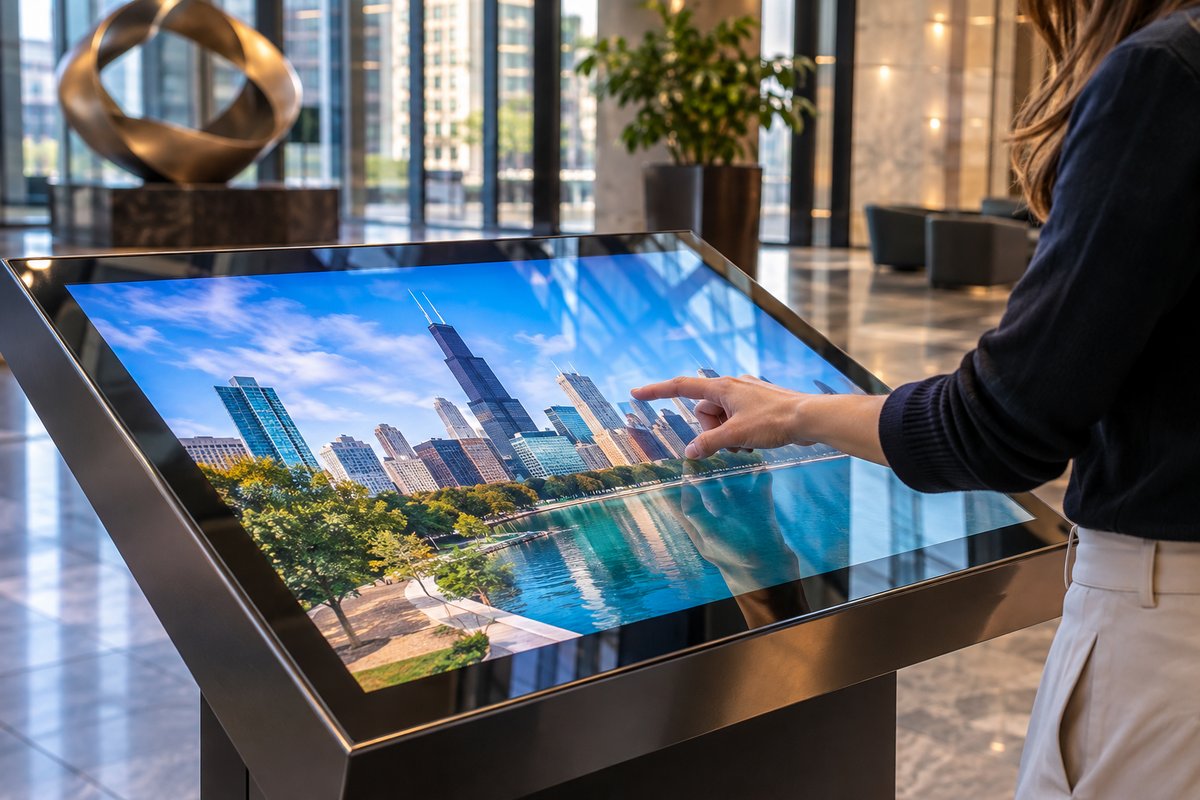
Compare ProFoil models and touch foil sizes to select the best fit for your Chicago space, whether for shops, lobbies, or exhibits.
Work with your AV integrator or designer to determine project goals, required display hardware, and the exact glass or acrylic location.
Every project is custom-quoted based on your selected model, size, and application. Request a quote to get started—no pricing is listed online.
Boost engagement and sales with interactive window displays, enhancing foot traffic for Michigan Avenue shops and neighborhood boutiques alike.
Enable touch-driven visitor experiences and learning opportunities in museums, galleries, and educational settings throughout the Chicago area.
Provide high-impact digital directories, concierge services, and interactive information at hotels, office lobbies, and seasonal events citywide.
Choose sizing for doors, windows, tables, and walls in environments like Wicker Park retail or the Loop’s corporate lobbies. Custom sizes up to 1.4 x 4.5 meters adapt to local building styles.
Review detailed specs of ProFoil Standard, Pro Touch 20/40, Object Recognition, Clear, and Circular models. Select based on display size, number of touch points, and the needs of your Chicago project.
Understand how wet-application works with Chicago’s typical indoor environments and glass types; the foil is always installed on the inside for climate resilience.
Obtain a tailored quote for your project size, touch needs, and application—perfect for retailers, exhibit teams, and AV professionals serving Chicago venues.
Check here to determine if a local building or sign permit is required for new electronic screens or display equipment visible from the street.
Get tourism insights and guidelines for enhancing visitor engagement through interactive glass displays in public spaces and attractions.
Chicago’s shifting seasons—cold, snowy winters and hot, bustling summers—mean foot traffic and visitor engagement patterns change throughout the year. Storefront retailers need flexible, attention-grabbing displays that can adapt to holiday shoppers in December or street festivals during summer. With TouchFoil, virtually any window, glass wall, or table inside your location transforms into a digital touchpoint, staying protected from outdoor weather while engaging passersby through the glass.
Venues such as museums, hotels, and lobbies also benefit from frictionless information delivery year-round. TouchFoil is particularly suited to high-traffic urban settings like Chicago, as its inside-the-glass application keeps it safe from weather and vandalism while maintaining high light transmission and transparency. This means Chicago institutions can offer interactive wayfinding, digital art, or promotional content even in busy public settings.
Event planners and real estate offices can deploy pop-up displays or interactive directories that stand up to heavy daily use in any season. Because the film is always mounted on the interior, there’s no concern about exterior condensation or freeze/thaw cycles affecting the foil’s operation. Whether you’re activating windows for holiday retail marketing or powering up lobby displays for conventions, TouchFoil adapts to your needs.
Installing interactive foil on glass in Chicago involves both technical and regulatory planning. Start by reviewing your site’s glass type and thickness—foils work best on non-metallic, thinner glass, but select models are compatible with laminated double glass. Make sure that power sources for the display and foil controller are grounded, and plan USB routing to avoid electrical interference from nearby power or video cables.
As with any electronic signage or display visible from the street, check with the City of Chicago Department of Buildings regarding permit requirements before work begins. Some storefront and public venue installations may require building or sign permits, especially for new electronic screens or changes to a historic façade.
Access and workspace are also important: TouchFoil installs by wet application on the inside of glass, which requires surface cleaning, precise alignment, and bubble removal. Allow 24 to 48 hours for the foil to dry before handling or powering up your AV displays behind it. For historic or landmark properties, consult preservation guidelines or site managers as part of your planning.
A successful interactive glass project depends on careful upfront planning and installation technique. Always test the foil’s touch area and alignment with your display before the final application—once applied, a foil cannot be repositioned or transferred to another pane. Avoid using glass or acrylic with any embedded metal, as this will disrupt the touch grid’s performance; a minimum 3 mm clearance from nearby metal framing is advised.
When routing cables, keep the USB connection for the controller separate from power and video lines to avoid signal interference. The TouchFoil controller should be securely fixed and grounded to the display frame as recommended. Refer to installation guides to ensure proper bubble removal and drying time, as rushed installs can compromise touch accuracy or adhesion.
If in doubt, consult a local AV professional or designer familiar with interactive display technologies. Proper advance planning—especially when seeking to meet Chicago’s building codes and site access requirements—ensures your project launches smoothly with reliable, high-quality touch performance.
Touch foil uses a transparent film with a grid of sensing wires (or no visible wires in ProFoil Clear) that adheres to the inside of glass or acrylic. It detects touch through up to 10–12 mm of non-metallic glass, depending on the model, enabling touch interaction through the window or wall. The film connects to a controller by USB, making it plug-and-play for a variety of display applications in Chicago storefronts, lobbies, and more.
You can use either an LCD or LED flatpanel display, or a projector with rear-projection film, behind the touch foil on glass. This allows you to adapt to retail, museum, or lobby environments—either with flat screens for bright, detailed visuals or with projection setups for large-format flexible installations in Chicago venues.
The foil must be applied to non-metal, non-wired glass or acrylic. For historic or older buildings, verify that the planned surface is compatible: laminated double glass is supported by some ProFoil models, but any metal mesh or embedded wire will interfere with touch detection. Always confirm glass construction before ordering and consider local guidelines for landmark or historic buildings.
Permit requirements are project-dependent and determined by the City of Chicago. Adding electronic or illuminated signage, visible from the public way, may require a building or sign permit. Always check with the Department of Buildings before installation to ensure compliance with local codes and avoid delays.
Every TouchFoil includes a 3-year warranty on the foil and a 1-year warranty on the controller. All models are CE and RoHS compliant. Detailed terms and responsibilities are available on request with your quote, tailored to your installation and location.
No. Once the foil is wet-applied and has dried on the glass or acrylic, it cannot be removed and reused elsewhere. It is important to pre-test and confirm alignment and function before permanent installation. If you anticipate repositioning, consult about sizing or consider finalizing display positions during your space planning.