
01 · Install
Apply the Foil on the Inside of the Glass
Clean and prep your glass, then wet-apply the touch foil to the inside, lining up the marked active area with your display’s edges.
Transform glass into multi-touch screens for Baltimore storefronts, lobbies, museums and more with advanced touch foil.
Baltimore’s thriving retail sector, creative museums, and bustling waterfront venues are embracing digital engagement. With transparent touch foil, you can create interactive storefront windows, kiosks, and touch tables directly behind glass—captivating passersby and delivering modern experiences throughout the year.
Touch foil from TouchFoil (powered by SSI) is a transparent film solution that installs on the inside of glass or acrylic, letting you turn virtually any clear surface into a multi-touch screen. Whether you’re designing for a summer festival on the Inner Harbor or upgrading a school lobby, touch foil blends seamlessly into Baltimore’s diverse spaces, delivering attention-grabbing interactivity with reliability.
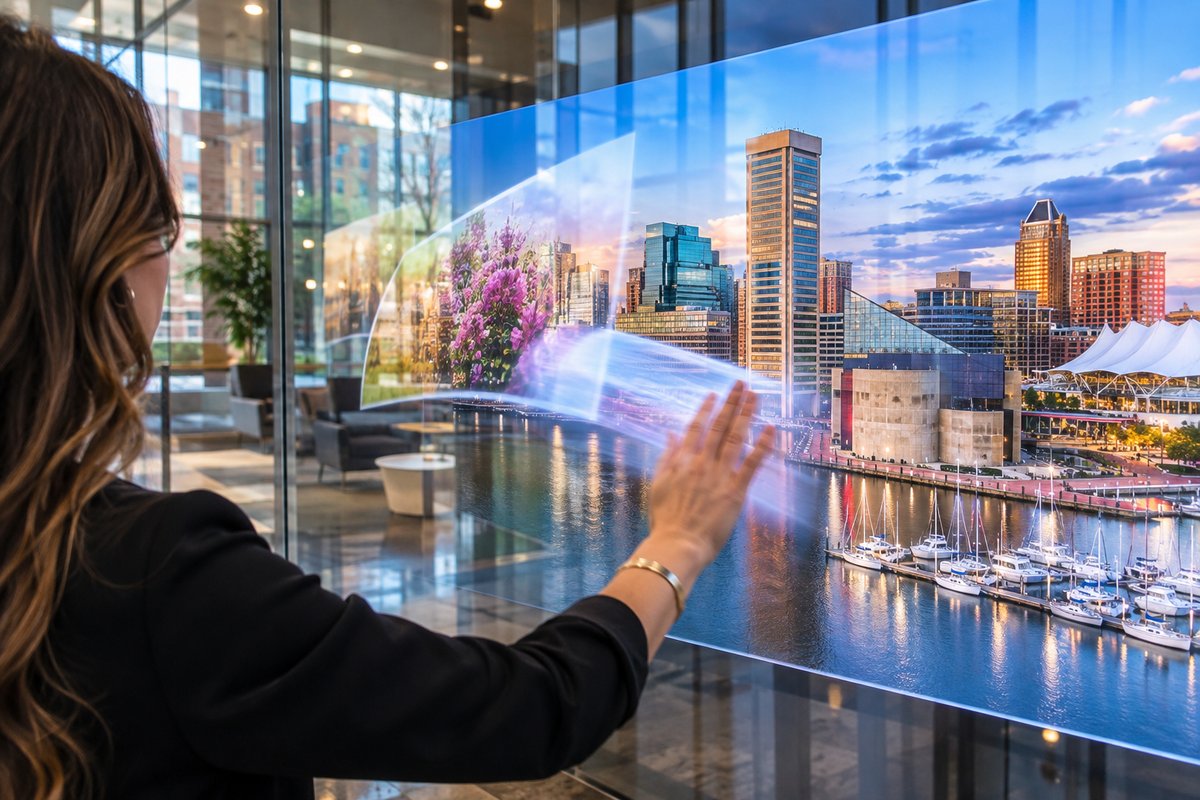
Clean and prep your glass, then wet-apply the touch foil to the inside, lining up the marked active area with your display’s edges.
Secure and ground the included controller to the frame, then connect it to your computer with the supplied USB—plug-and-play.
Pair with rear-projection film, an LCD, or LED display to invite real-time touch interaction through your storefront, exhibit or table.
Draw attention in Fells Point or Harbor East with eye-catching, interactive windows that drive engagement and let customers interact even after hours—perfect for changing seasons and busy downtown streets.
Enhance wayfinding, exhibits, or concierge services in Inner Harbor museums, visitor centers, or hotel lobbies with intuitive touch tables and glass directories—ideal for high-traffic, year-round use.
Make first impressions count in Baltimore’s downtown offices and real estate displays. Bring interactive presentations or property searches to glass walls and meeting room panels.
Match the active area and touch point requirements to your application—Baltimore windows and lobbies often need larger sizes for impact. Custom sizes up to 1.4 x 4.5 meters fit nearly any glass wall or storefront window within typical venue dimensions.
Select ProFoil Standard for compact windows and kiosks, or Pro Touch 20/40 for larger or high-traffic Baltimore installations. Consider ProFoil Object Recognition for interactive exhibits or multi-user tables in museums and educational spaces, or ProFoil Clear where a fully transparent, wire-free look is essential.
Read about mounting on the inside of glass, active area alignment, and system setup. Baltimore venues appreciate easy plug-and-play integration for installations during off hours or over weekends.
Every Baltimore project is unique. Use our quote form to specify location, glass type, and screen size—receive a tailored solution for local buildings and creative applications.
Baltimore’s distinct seasonal changes—including humid summers and occasional winter storms—make it essential for displays to be protected inside temperature-controlled venues. Touch foil is always mounted on the inside of the glass, so it avoids direct exposure to outdoor weather while providing interactive capability in storefronts, museums, hotels, and more. This makes it ideal for applications in high-traffic Inner Harbor areas as well as neighborhood shops, schools, and event spaces.
During Baltimore’s festival-heavy summers and busy tourist seasons, retailers and venues can draw visitors with interactive window displays that stand out both day and night. Multi-touch capability lets multiple users engage at once, perfect for visitor centers or transit hubs experiencing high volumes during major events or conventions.
In colder months or during inclement weather, touch foil maintains its performance behind insulated glass, keeping interactive information and advertising accessible through the window without exposing electronics or users to the elements. This flexibility supports Baltimore’s year-round business calendar and the evolving needs of public venues, hospitality, and education.
Always confirm the glass type and thickness are suitable for the selected foil model, and consider the typical crowd flow and lighting at your Baltimore site to choose the ideal screen size and display technology.
Proper planning ensures smooth integration of touch foil into Baltimore’s diverse architectural styles, from historic rowhomes to contemporary office buildings. The glass must be free of any metallic coatings, films, or embedded wires to help ensure reliable touch performance—check with your building engineer if you’re unsure about your glass composition.
Mounting the foil is a one-time procedure; the film is wet-applied to clean glass, carefully aligned to the display area, and allowed to dry for at least 24 hours. Be sure to plan installation times around business operations, especially in high-traffic retail or hospitality spaces common to downtown Baltimore.
Electrical setup requires grounded power and careful cable routing. The controller must be fixed and grounded to the frame—as ungrounded or loose components can create interference or reduce touch accuracy. USB cables should be kept away from noisy power and video cables, especially in cluttered office or exhibit environments.
Projection-based setups may require low-ambient-light environments; rear-projection film is available from our sister site. For LCD or LED behind glass, verify cooling and accessibility needs for ongoing use in Baltimore’s active venues.
A frequent error is selecting glass with metal coatings, mesh, or embedded wires; this interferes with the touch foil’s sensing capabilities, causing erratic operation or reduced sensitivity. Always verify the glass composition, especially in older Baltimore buildings or where recent renovations included energy-saving films.
Attempting to relocate or reuse a foil after install is not possible—the wet application permanently bonds the film, so all testing and alignment should be completed with the film in its release liner before installation.
Leaving metal window hardware or trim closer than 3 mm to the active foil area can result in touch inaccuracy; plan window finishes accordingly. In spaces like retail corridors or mixed-use buildings, coordination with contractors ahead of installation is critical.
Lastly, skipping proper cable grounding or running USB close to high-voltage lines may cause unpredictable touch response. Always follow power and grounding guidelines, and reach out for a quote when planning for larger or non-standard display integrations.
Touch foil is a transparent film with a fine sensor grid that mounts on the inside of glass or acrylic. Once paired with a display, it senses finger touches through the glass, creating an interactive screen for storefronts, lobbies, or museums. All electronics remain indoors and protected from outdoor weather, ideal for Baltimore’s humid summers and cold winters.
Touch foil is always mounted on the inside of the glass, never the outside. This ensures durability and protection from the region’s changing climate, including rain, snow, and humidity. Outdoor touch activation occurs through the window or glass wall.
You can use either a rear-projection setup (foil + glass + rear-projection film + projector + computer) or place an LCD/LED display behind the touch foil. Your choice depends on site lighting, viewing distances, and installation logistics, which vary in different types of Baltimore venues.
Typical touch accuracy is plus or minus 2 mm, with under 1 mm possible using Object Recognition models. Response time is under 10 ms, making touch interactions fluid and precise for interactive kiosks, tables, and storefronts.
The touch foil carries a 3-year warranty, and the included controller is covered for 1 year. All products are CE and RoHS compliant. Be sure to check local regulations or consult a Baltimore-area code official for electrical or display requirements specific to your building.
Simply use the online quote form to specify your glass size, desired interactive area, and project details. You will receive a tailored recommendation and quote—no prices are listed on the website, as every solution is quoted per project.