
01
Select Your Glass Surface
Choose an existing storefront window, acrylic barrier, or table with clear non-metallic glass—thinner glass is best for touch accuracy.
Deploy touch foil in Austin, TX to retrofit glass with vibrant, interactive screen capability that engages customers and visitors day or night.
In the heart of Texas, public-facing businesses and cultural spaces in Austin need innovative ways to captivate and inform. Touch foil technology from TouchFoil—by Screen Solutions International—turns any storefront window, museum display, retail table, or glass wall into a dynamic, multi-touch interactive screen. No matter the climate or crowd, your glass transforms into an inviting, digital touchpoint that works through glass up to 12 mm thick.
Whether you’re creating seasonal retail windows for holiday shopping, immersive visitor experiences at entertainment events, or interactive maps for tourists and students, TouchFoil empowers your glass space with a responsive, transparent and intuitive solution—all while preserving light and views. Every project is quoted individually for the perfect match of size, touch points, and technology for Austin’s vibrant and diverse venues.
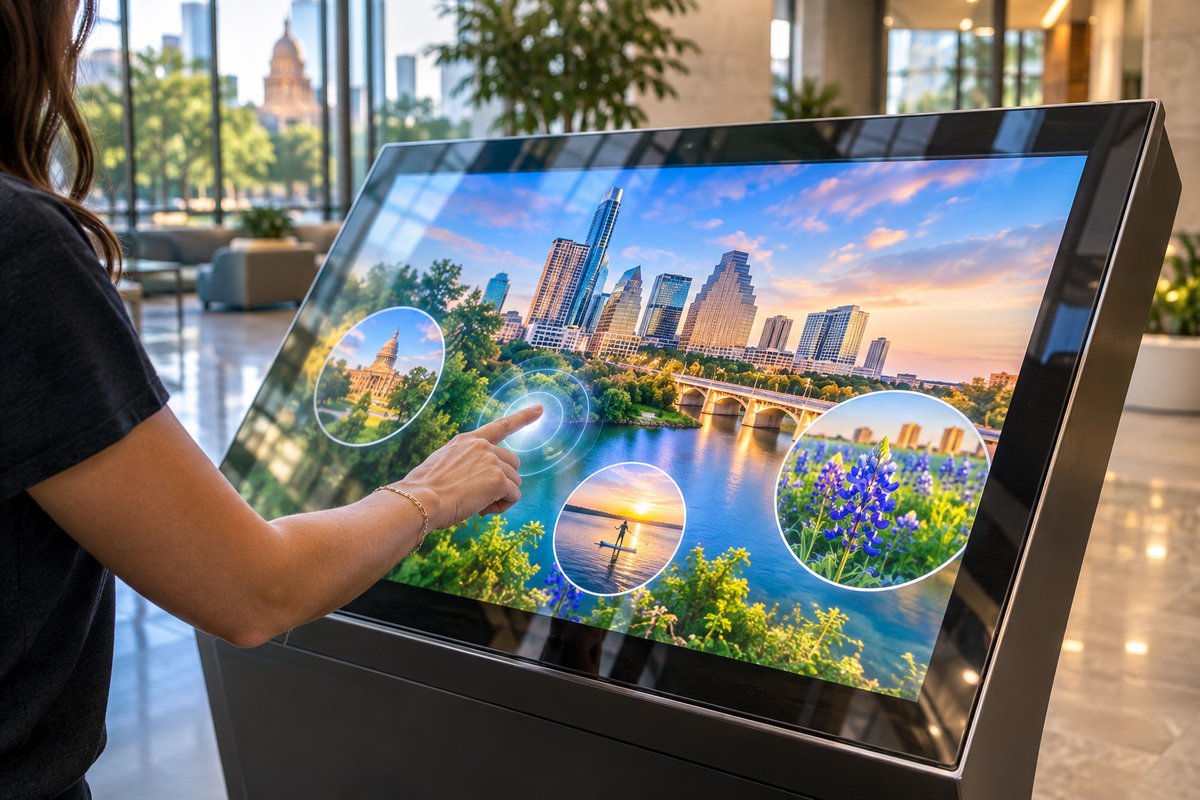
Choose an existing storefront window, acrylic barrier, or table with clear non-metallic glass—thinner glass is best for touch accuracy.
Get a project quote for customized sizing, model, and accessories. Decide if you’ll use a rear-projection film and projector or an LCD/LED display behind your glass.
Wet-apply the transparent touch foil to the interior of your cleaned glass, then connect the controller via USB to your computer. Complete calibration according to your model’s instructions.
Retailers in Austin’s popular shopping districts use touch foil to turn large glass windows into interactive product selectors, self-service info points, or promotional displays. Ideal for engaging customers even after hours.
Museums, schools, corporate lobbies, and exhibit spaces use touch foil on glass tables or partitions for interactive maps, digital directories, or educational applications that work seamlessly through glass.
Touch foil enables pop-up interactive kiosks, wayfinding in hospitality settings, or real-estate displays, letting passersby and guests access rich content safely and effortlessly.
Start here to review all available sizes and specs. Choose a touch area that matches your Austin storefront or venue, and be mindful of climate-conditioned indoor glass surfaces for optimal performance.
Explore options from standard 10-point foils to advanced object recognition. Pick ProFoil Standard for small retail windows, Pro Touch for large installations, Object Recognition for museum tables, or Clear for ultra-discreet signage.
Deepen your knowledge of the installation process and technology basics. This is essential reading for anyone in Austin planning to retrofit glass indoors or at climate-controlled venues.
Every Austin project is quoted individually, based on your chosen interactive area, touch model, and intended use. Start your request here to discuss requirements unique to your space or event.
Access guidance on building and electrical codes in Austin, which will help ensure your interactive window or display meets all structural and safety requirements.
Discover local destinations and events where interactive glass screens can stand out to tourists and residents searching for engaging, modern experiences.
Plan creative touchscreen displays in sync with state tourism initiatives and seasonal visitor flows in Austin and beyond.
Austin’s peak retail and tourism periods, especially during spring festivals, summer events, and the holiday shopping season, present excellent opportunities for interactive storefront windows. Touch foil technology enables retail stores, hotels, and entertainment venues to engage every passerby—through vibrant, touch-enabled glass—without sacrificing natural light or visibility. Museum exhibits, concert venues, and food halls can use touch tables and digital signage for hands-on information all year long.
Many Austin businesses operate extended hours for events like SXSW, making it important to provide interactive information even when doors are closed. With touch foil, you can create after-hours shopping windows, touchscreen menus for cafes, or real estate maps for visitors that are accessible night and day, rain or shine.
The flexibility of touch foil fits Austin’s creative approach to commerce, from pop-up markets to flagship stores. Whether adapting your business for summer heat, winter rain, or festival crowds, transparent touch glass is a future-ready investment in digital engagement.
Combine dynamic visuals with robust interaction: the result is a storefront or venue that draws attention, increases dwell time, and provides memorable interaction appropriate for Austin’s energetic, tech-forward environment.
Every Austin-area interactive installation must be planned according to local building and electrical codes. Start with a review from the Building Technical Codes office to clarify what is permitted for commercial displays, street-facing applications, and public lobbies with accessible touch glass. Requirements can vary for fire ratings, electrical outlets near glass, and equipment mounting methods—check with the city and your architect or AV consultant early in the process.
For optimal performance, the glass itself should be a single pane (or laminated, if using Pro Touch models), non-metallic, and as thin as your installation requires for maximal touch sensitivity—standard glass, acrylic, and safety glass are all compatible if they are metal-free. Always ground your equipment and keep all control hardware and cables away from potential sources of interference.
Power inlets for computers, displays and projection gear must be properly grounded and compliant with Austin standards. USB and HDMI runs may require attention to cable length and routing, especially in larger lobbies or wide storefronts.
Planning for accessibility, ADA compliance, and visitor flow is also important in commercial city venues. Discuss placement and interactive height with your team and local inspector to ensure full compliance and a successful public-facing rollout.
The most frequent problem is mounting the foil on the wrong side of the glass—the film must always be applied to the interior surface, away from outdoor moisture or physical impact. Never mount outdoors, as the foil is not rated for exterior exposure.
Another source of errors is underestimating the importance of a clean, metal-free substrate. Any embedded wires, grid glass, or nearby metal can interfere with the sensing accuracy of the touch foil, leading to poor responsiveness, especially in humid Austin weather.
Improper power grounding or running USB/data cables parallel to AC or high-power display lines may introduce interference: always separate cable runs and ground equipment to an approved, code-compliant source.
Skipping the test fit before wet application frequently leads to misalignment. Take time to dry-fit first to ensure the foil covers your intended active window area exactly, as the foil cannot be repositioned once installed.
No, the touch foil is designed exclusively for installation on the interior side of glass or acrylic. It is not rated for outdoor mounting or exposure to Austin’s weather conditions. Always install in a climate-controlled environment, such as inside a shop, office, museum or educational space.
Touch foil is compatible with most non-metallic glass and acrylic panes. Thinner glass offers better touch accuracy, and there should be no metal within the glass layer or closer than 3 mm to the foil. Laminated glass can be used with certain foil models, but always verify compatibility before installing.
Model choice depends on size and interactivity: ProFoil Standard supports up to 10 touches on glass up to 10 mm, Pro Touch offers 20 or 40 points for larger areas and through thicker glass, and Object Recognition supports 40+ touches with marker detection. Each project in Austin is quoted to match your usage scenario.
Installation is a wet process: the foil is positioned on the inside surface of clean glass, activated with water or gel, then squeegeed smooth, aligned with the planned screen area. The product is designed for integrators and venue teams familiar with AV installations. Always do a dry test fit and allow 24–48 hours for full drying before use.
Yes, all touch foil models available through TouchFoil are CE and RoHS compliant. This means they meet European safety, health, and environmental requirements for these categories, important for museum, retail, and public venue deployments.
Every touch foil purchase includes a 3-year warranty on the foil and a 1-year warranty on the controller. Make sure you retain your purchase documentation and consult with our technical team for any post-installation questions.