
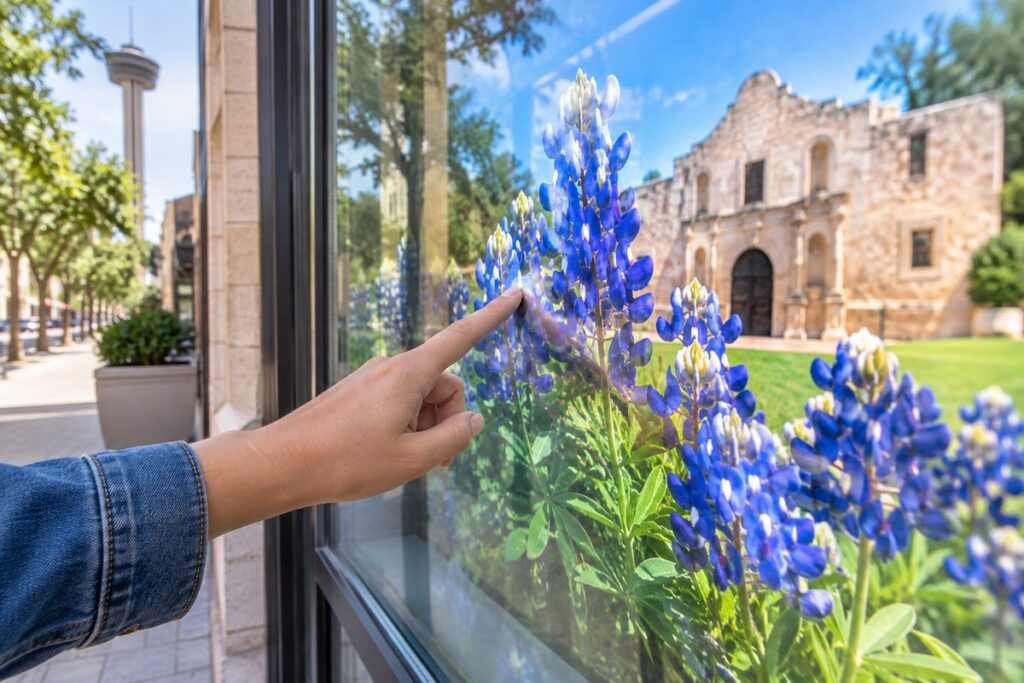
What Is Touch Foil and How Does It Work?
Touch foil is a transparent film made with a fine sensing grid that mounts on the inside of glass or acrylic surfaces. When paired with a display or projector, it transforms a window, kiosk, or table into a multi-touch interactive screen. The TouchFoil system features ProFoil films from Screen Solutions International (SSI), supporting a range of model sizes and use cases in locations like San Antonio, TX.
Because the film’s grid can sense touches through glass, it doesn’t require a special pane—though correct glass selection is important. No visible wires are present on the ProFoil Clear model, ensuring a seamless and highly transparent look. The system is plug-and-play: a controller board and USB cable are included, powered by 5 V over USB, and response times are under 10 ms.
Touch foils are available with different numbers of touch points, size ranges, and even object recognition, providing flexibility for interactive storefront windows, touch table installations, or museum displays. Each foil is quoted per project so you can match the solution to your unique site and interactive goals.
How Touch Foil Creates an Interactive Storefront or Table
Creating a touch-enabled glass surface starts with mounting the foil on the inside face of your glass or acrylic. There are two primary ways to build an interactive system using touch foil products:
- LCD/LED display behind glass: The foil senses touches through the panel, which is positioned in front of a conventional monitor or TV.
- Projector and rear-projection film: The foil is paired with a projector, using rear-projection film on the glass for vivid, visible interactive visuals.
Each approach supports responsive, multi-touch interaction through the glass surface. Interactive touchscreen foils like ProFoil models let visitors browse, learn, or shop without ever touching the display hardware itself, maintaining a protective barrier between users and electronics—useful for high-traffic areas from retail to visitor centers in San Antonio.
The flexibility of mounting on the inside of glass means your interactive storefront can benefit from better weather protection, while allowing for a clean appearance on the public-facing side. This approach is especially useful in the diverse climate and vibrant retail environments found throughout the city.
Key Components: What Goes Behind the Glass for a Touch Screen
To transform your window or display into a touch screen, you need to plan for both the touch foil and what sits behind the glass. There are two main setups:
- Foil + glass + rear-projection film + projector + computer
- Foil + glass + LCD/LED display + computer
The choice between projection and direct-view display depends on factors such as brightness, viewing angle, installation space, and budget. SSI sister site RearProjectionFilms.com is a resource for projection screen solutions to pair with your touch foil installation. In all cases, you will need grounded power for safety and to ensure touch signal integrity—be mindful of local codes and hire a qualified electrician if necessary.
With both systems, USB cabling runs to the controller—avoid routing USB near power or display cables to minimize interference. These elements should be considered when planning kiosks, interactive storefronts, or museum exhibits in any San Antonio facility.
Planning Your Glass: Thickness, Materials, and Sizing
Excellent touch sensitivity depends not only on the foil but also on proper glass selection and sizing. Standard ProFoil models operate through glass up to 10 mm thick (12 mm on Pro Touch 20/40 models), and thinner glass yields the best touch accuracy. Laminated double glass is supported by some models, provided there is no air gap.
It is essential that the glass contains no metal, as metal can interfere with the sensing grid. Metal framing should remain at least 3 mm away from the foil’s active area. For large panels—such as storefront windows or wide interactive tables—check the Touch Foil Sizes and Specifications page to match your needed dimensions. Custom sizes are available up to 1.4 x 4.5 meters, and the Circular Touch Foil supports round applications up to 140 cm in diameter.
Always test fit and check the installation location before permanent installation, as foils are wet-applied and cannot be moved to another pane. Careful measurement and site planning will prevent costly errors and maximize both interactivity and usability for your San Antonio application.
Installing Touch Foil in San Antonio: Procedures and Practical Considerations
Installation involves cleaning the interior glass surface, aligning the marked active area of the foil with your display region, and applying it using a wet process. Water and bubbles are carefully squeezed out, followed by a drying period of 24 to 48 hours. Because the foil is a one-time install, confirm everything—fit, screen position, and cabling—before starting.
Touch accuracy is plus or minus 2 mm (less than 1 mm with the Object Recognition models), and light transmission is at least 89 percent (or 85 percent for Clear). To ensure performance, the USB controller should be fixed and grounded to the frame, matching recommendations from the How Touch Foil Works and How to Install It guide.
Because San Antonio storefronts may be exposed to intense sunlight or humidity, it’s prudent to choose glass and framing that won’t trap heat, and consider an HVAC strategy for interior locations. Review installation approaches with your AV integrator, contractor, or builder to address local building standards and optimize for your specific environment.
San Antonio Permitting and Compliance: What To Know for Storefronts
Many interactive storefront window or kiosk projects in San Antonio will fall under local sign, display, or digital signage ordinances. Before starting installation, review requirements with the office linked through the Sign & Billboard Permits resource. This page outlines rules and steps for illuminated and digital signage approval, which often apply to interactive systems in public-facing locations.
If your installation is in a heritage district, or if it’s especially large or visible, additional review or restrictions may apply. Discuss planned cabling and power upgrades with your contractor to avoid delays. For best results, coordinate early in the design process with your landlord, local officials, and fire/life safety consultants.
All ProFoil touch foils are “CE and RoHS compliant,” but check with San Antonio offices for any additional compliance required for your location. Permitting, zoning, and occupancy requirements can shift based on business district and signage type, so start early and consult with local resources as needed.
Selecting the Right ProFoil Model for Your Application
TouchFoil offers several ProFoil models, each suited for different scenarios:
- ProFoil Standard: 10 touch points, works through up to 10 mm glass, 10.1 to 55 inch sizes; automatic calibration suits most wall and window applications.
- ProFoil Pro Touch 20 / 40: Supports 10 points under 32 inch, 20 or 40 points on 32 inch and above, with glass up to 12 mm including some laminated panes (without air gap); zone calibration and MacOS multi-touch support on the 40-point version.
- ProFoil Object Recognition: More than 40 touch points, 43 to 75 inch panels, accurate to under 1 mm and can detect special marker pucks for interactive experiences—SDK or complete package available.
- ProFoil Clear: Fully transparent, no visible wires; 10 points, up to 10 mm glass, sizes from 2 to 98 inch, and supplied laminated on glass.
- Circular Touch Foil: Supports round tables or dome displays up to 140 cm active area, connectable to form large interactive surfaces up to 280 cm diameter.
All models are quoted per project, with a “3 years on the foil and 1 year on the controller” warranty. Evaluate expected traffic, content, and user interaction when choosing your model or refer to the detailed specifications and sizes available on TouchFoil’s site.
Integrating Interactive Touch Foil Displays into San Antonio Spaces
From the River Walk to the Pearl District, San Antonio’s busy business and visitor corridors offer an ideal backdrop for interactive experiences. Retailers, museums, schools, and real estate offices can use touch foils to bridge the gap between digital interactivity and walk-in engagement. Using resources such as the Official Visit San Antonio Visitor’s Guide helps align your interactive content and location with tourism flows and local interests.
Lighting and visibility are key—especially with large windows and diverse Texas daylight conditions. Consider internal shades, displays with higher brightness, or well-placed projection if your site receives strong sunlight. Make sure HVAC, access control, and cleaning routines fit your interactive glass installation for both durability and accessibility.
Work closely with AV integrators and exhibit builders to balance accessibility for touch, audience flow, and secure mounting of the display, foil controller, and attendant cables. The right planning ensures a safe, engaging, and efficient installation—even in the busiest downtown spaces or visitor centers.
Touch Foil Storefront FAQ
Can touch foil be installed on any type of glass?
Touch foil requires glass or acrylic with no metal content, and glass thickness should be checked against your chosen model. Thinner glass maximizes touch accuracy, and some foils can support laminated (but not double-glazed) glass as long as there’s no air gap.
Is a permit required for an interactive window in San Antonio?
Most public-facing digital or illuminated displays—including interactive windows—require local permits. Visit the Sign & Billboard Permits site for guidelines and discuss your plans with city officials before installation.
What kind of warranty and compliance does TouchFoil offer?
TouchFoil ProFoil products include a 3 years on the foil and 1 year on the controller warranty. All foils are CE and RoHS compliant, meeting commonly required technical directives for the U.S. market.
Start Planning Your San Antonio Interactive Storefront
Adopting touch foil technology lets San Antonio businesses, cultural spaces, and designers quickly transform glass storefronts, kiosks, and tables into unique, engaging touch screen experiences. Whether your goal is interactive retail, hands-on learning, or high-impact wayfinding, the variety of TouchFoil models supports a tailored solution for nearly any application.