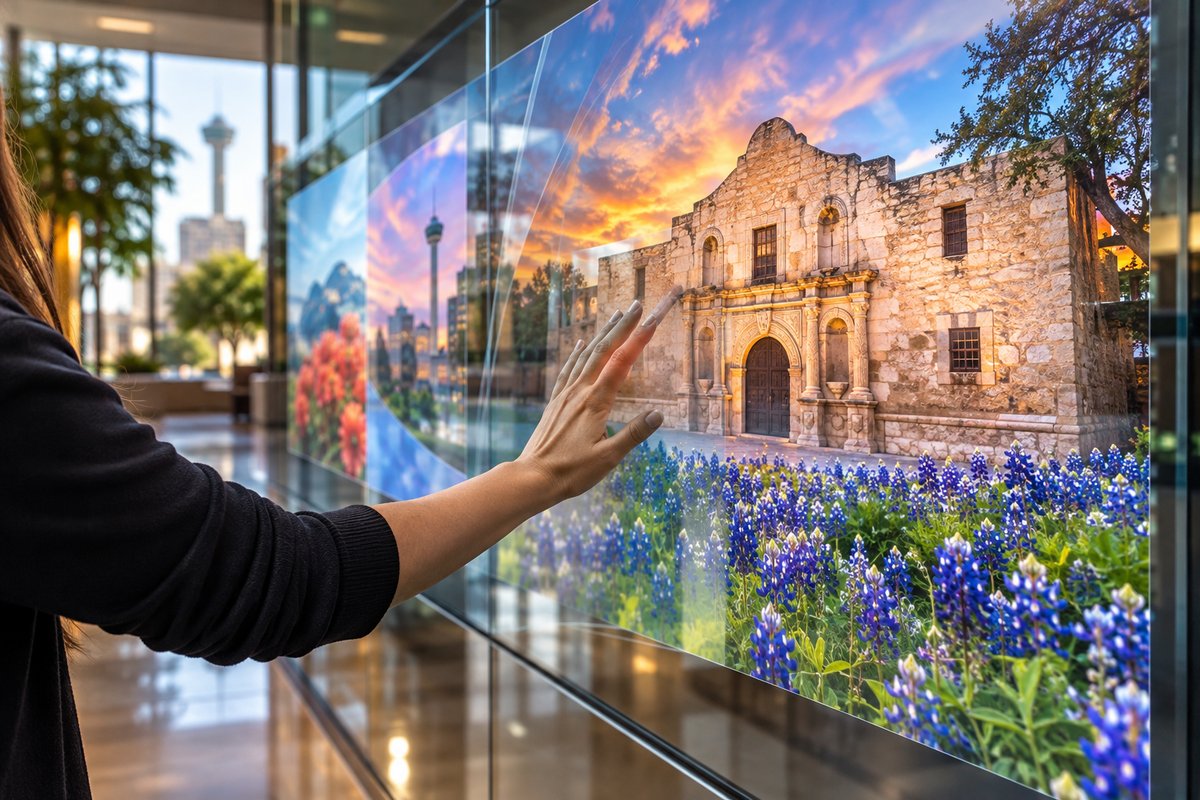
Mount TouchFoil on Glass or Acrylic
TouchFoil is always installed on the inside of glass or acrylic. Wet-apply the foil, carefully aligning the marked active area with your display edges and removing all air and water for a flawless finish.
Transform your San Antonio storefront or venue glass into an interactive display with TouchFoil, supporting multi-touch through glass.
TouchFoil puts advanced touch technology behind storefront windows, kiosks, lobby glass, or digital tables by mounting a transparent, sensor film on the inside of glass or acrylic. With an LCD, LED, or projector behind, you can create an engaging, weather-protected interactive touch screen for San Antonio retail environments, museum exhibits, school campuses, or hospitality entries.
Every TouchFoil model from SSI is designed for flexibility—available in a range of sizes and formats for San Antonio’s diverse spaces, from River Walk shops and Alamo Plaza displays to university and hotel lobbies. With robust warranties and compliance, plus easy integration and a single install process, TouchFoil enables your project to interact directly with customers and guests through glass.

TouchFoil is always installed on the inside of glass or acrylic. Wet-apply the foil, carefully aligning the marked active area with your display edges and removing all air and water for a flawless finish.
Connect the included controller board with USB to your computer, keeping display and power cables separated. Grounding the controller to the window frame is recommended for best accuracy.
Set up your LCD, LED panel, or projector and rear-projection film behind the glass, powered and ready for content. The result: interactive touch screens visible and responsive to users through the glass.
Turn boutique windows, mall kiosks, and quick-service counters downtown and in shopping centers into attention-grabbing, interactive displays—perfect for promotions, directories, and customer engagement.
Enhance museum exhibits or hotel lobbies with protected interactive surfaces for wayfinding, visitor information, or educational content, all behind easy-to-clean, secure glass.
Deploy touch tables, glass walls, or meeting room displays for interactive presentations, campus information, or collaborative workspaces—all without altering existing glass architecture.
Review available standard and custom sizes to match San Antonio storefronts, museum entrances, and local visitor centers. Choose the right size for windows, kiosks, or tables, including extra-large or specialty shapes.
Compare ProFoil Standard, Pro Touch 20/40, Object Recognition, Clear, and Circular models. Select the type that matches your preferred touch points, glass thickness, and display size for your San Antonio project.
Read detailed instructions on wet-applying TouchFoil films to glass, aligning for proper function, and integrating with projectors or displays. Includes key planning notes for San Antonio’s humidity and glass types.
Every installation is quoted by project. Use this form to request fitting and pricing details tailored to your San Antonio venue, retail, educational, or event space.
Determine permit and code requirements for digital and illuminated glass displays in San Antonio by reviewing commercial sign regulations.
Find event timing, visitor traffic, and tourism patterns to align your interactive displays with peak seasons and local interests.
San Antonio’s climate supports year-round retail activity and busy tourism, from spring events like Fiesta to holiday shopping and summer festivals on the River Walk. TouchFoil enables temporary or permanent interactive storefronts that attract foot traffic without exposing electronics to rain, humidity, or seasonal temperature swings.
Museums and visitor centers often face heavy visitor flows during local events and vacation periods. TouchFoil is ideal for protected donor walls, interactive artifact panels, or guest registration, all easily integrated into existing glass partitions or booths.
Hotels and real estate offices off Market Square or near convention centers can use glass touch displays for lobby directories, interactive maps, or digital concierges, maximizing engagement while retaining a modern, upscale architectural look.
For educational and corporate offices, TouchFoil supports touch tables and walls for presentations, campus tours, or collaborative digital work—offering both hygiene and security benefits by allowing remote updating of shared displays.
Before specifying a TouchFoil system, verify your glass is compatible: no embedded wire or coating, not laminated with metal, and within the thickness supported by your chosen model. For large or curved installations typical of some San Antonio venues, custom sizing up to 1.4 by 4.5 meters is available.
TouchFoil controller boards run from 5V USB and must be properly grounded to the glass frame for stable operation, especially in mixed-use buildings or historic structures with legacy wiring. Always separate USB signal cables from mains power and high-current display wiring to avoid touch interference.
Wet application requires a clean environment and enough time (24–48 hours) for drying. In San Antonio’s humid climate, allocate at least the recommended drying interval before powering up your display or updating content on the interactive glass surface.
Before starting construction or a major retrofit, always check San Antonio’s current signage and display codes—especially if your glass surface will be visible from the street, illuminated, or serve as an exterior sign.
Do not attempt to install a TouchFoil on glass with a metallic film, embedded heating wires, or conductive coatings—these reduce performance and may prevent touch from registering accurately.
Always fully test the TouchFoil for alignment and responsiveness before adhering it. Once installed and dried, the foil cannot be repositioned or moved to another panel.
Be mindful of edge conditions: ensure at least 3 mm clearance from any metal frame and do not allow cables to run parallel with display power or video leads, as this can cause interference.
For all installations, consult an electrician or AV professional for proper grounding and USB routing, as this will ensure reliable operation and maintain your 3-year foil and 1-year controller warranty.
Standard, clear, and acrylic glass panes with no embedded metal or wire are ideal. Glass up to 10 mm thick (12 mm for some models) is suitable, and thinner glass generally increases touch accuracy. Always verify compatibility with your specific TouchFoil model before installation.
No, the foil always mounts on the inside of glass or acrylic, protecting the sensor film and electronics from exposure to heat, dust, and moisture. TouchFoil is not designed for outdoor/externally-faced glass surfaces.
Digital and illuminated displays may require sign or construction permits if visible from the street or used for commercial advertising. Review San Antonio’s sign and billboard regulations and consult local officials to ensure your project is in compliance.
TouchFoil is wet-applied to clean glass and cannot be reused once mounted. Carefully align, eliminate bubbles, and let dry for 24–48 hours for optimal results. Always perform a full functionality check before installing, as relocation is not possible after application.
Each purchase includes a 3-year warranty on the foil and a 1-year warranty on the controller. All TouchFoil models are CE and RoHS compliant, meeting electrical and safety standards for commercial spaces.
Yes, custom shapes and sizes are available for curved glass, circular displays, or extra-large storefronts—up to 1.4 meters by 4.5 meters. Specific fit and touch point options will be quoted based on your project’s design requirements.