
01 · Plan
Match Foil to Your Glass and Display
Select the right TouchFoil model and size based on your window dimensions, desired number of touch points, and display type—LCD, LED, or projector.
Make any glass storefront, kiosk, or display in New Orleans interactive with TouchFoil’s transparent touch sensing technology.
Bring new life and engagement to glass surfaces in New Orleans with TouchFoil. As a transparent film applied to the inside of glass or acrylic, TouchFoil instantly transforms windows, kiosks, and tables into vibrant multi-touch screens. Whether you’re designing for the hospitality, retail, museum, or education sector, TouchFoil delivers innovative interactive experiences while preserving your view and ambiance.
TouchFoil is ideal for New Orleans’ blend of historic storefronts, busy hotel lobbies, visitor centers, and event venues that thrive year-round. Its seamless integration and plug-and-play setup means touch screens can enhance customer engagement without changing the look of your windows—making it perfect for festival seasons, tourist events, and daily business traffic.
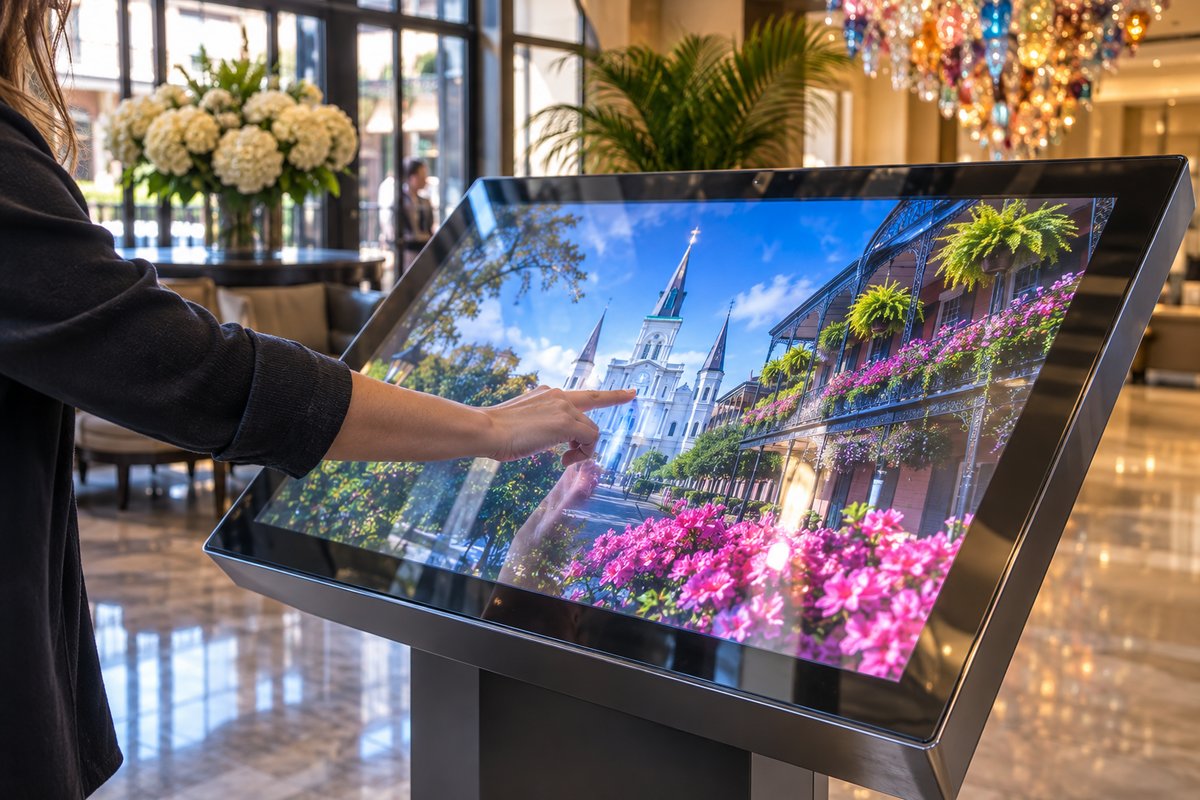
Select the right TouchFoil model and size based on your window dimensions, desired number of touch points, and display type—LCD, LED, or projector.
Wet-apply the foil to the inside of clean, metal-free glass. Align the marked area, remove bubbles, and allow 24–48 hours to dry before connecting the included USB-powered controller.
Connect your display and power source, calibrate touch zones if needed, and start interacting—turning any storefront or glass wall into a real-time digital experience.
Boost window engagement with product demos, virtual assistance, or interactive promotions—all visible and touchable through your glass, even when the shop is closed.
Create immersive, touch-enabled exhibits or information kiosks that draw in guests during Mardi Gras, jazz festivals, and tourist seasons.
Upgrade hotel, real estate, or school lobbies with touch-activated directories or interactive art, enhancing guest experience and modernizing the space.
Choose this reference for detailed sizing, touch point, and glass compatibility information to plan the exact fit for your New Orleans glass project.
Review all available TouchFoil types—Standard, Pro Touch 20/40, Object Recognition, Clear, and Circular—and select the best-performing option for local venues, festivals, or high-traffic areas.
Follow step-by-step directions for prepping local glass, applying the foil in New Orleans’ climate, and ensuring a successful install in both historic and new commercial spaces.
Start a no-obligation quote to customize your touch foil order for any storefront, lobby, or exhibit in the New Orleans region.
Use this official city guide to check what permissions or notifications you’ll need to modify storefront windows or install new digital displays behind glass.
Review this tourism guide for insights on expected foot traffic and seasonal events that can benefit from interactive glass displays.
New Orleans’ vibrant culture and year-round events—from Mardi Gras to fall food festivals—mean storefronts and public venues stay in the spotlight. Interactive glass powered by TouchFoil stands out in the city’s dynamic visual landscape, allowing retailers and designers to refresh their message instantly to match the season. In a climate that brings heavy foot traffic even during hot, humid summers and cool winters, touch-enabled windows can promote products or information to passersby no matter the weather.
Museums, schools, and hotels across the city can leverage touch table installations or wall-mounted digital guides to offer hands-on information without compromising on style. Historic storefronts in the French Quarter benefit from the completely transparent ProFoil Clear, which keeps classical window looks intact while adding digital touch—all without visible wires.
Event venues and tourist information centers see increased interaction and dwell time by using interactive kiosks that react through glass, perfect for guiding visitors during festivals and high-traffic periods. With no moving parts exposed to the elements, the technology is well-suited for glass contained within lobbies, vestibules, or behind secure panels.
Proper planning ensures a smooth interactive installation. Start by confirming the glass has no metal in it and assessing thickness—the recommended limit is generally up to 10 mm or 12 mm depending on the TouchFoil model. For optimal performance, use ground power for the included controller and keep metal fixtures at least 3 mm from the foil area.
Because every project is unique, reach out to local permitting offices before modifying street-facing glass or adding large-format screens. Use the Guide to Building Permits to see if you’ll need city approval or documentation. In New Orleans’ climate, also consider indoor humidity or daily traffic patterns, scheduling wet-application and drying times for quieter periods.
When planning content playback, choose locations where the controlling computer, USB cable, and display can be securely mounted inside and away from potential condensation, direct sunlight, or interference from display and power cables. Zone calibration can be especially helpful on larger installations in venues with varying lighting or frequent glass cleaning.
Before permanent installation, always test your TouchFoil and display combination on a spare pane or a masked-off section of glass. Foils are single-use and cannot be repositioned once applied, so taking a careful, measured approach will prevent costly errors.
During install, avoid letting water or dust get trapped under the foil—New Orleans’ warmer seasons mean doors and windows may be open, so indoor air quality matters. Squeegee out all bubbles thoroughly and allow for a full 24–48 hour drying period with minimal disturbance for the best long-term result.
Be mindful of the electrical environment: keep USB data and power cables separated from high-voltage lines to reduce interference and preserve fast response times (under 10 ms is typical). If integrating with third-party AV or signage solutions, coordinate power and data routing from the start to ensure a seamless guest experience.
TouchFoil is a transparent, thin film with a fine grid of sensing wires (or no visible wires on ProFoil Clear) that adheres to the inside of glass or acrylic. When installed, it senses the position of fingers through the glass and relays these touches to a USB-connected controller, essentially turning your storefront, table, or glass wall into a fully interactive multi-touch screen. It works with either a rear-projection setup or an LCD/LED display placed behind the glass.
The TouchFoil itself always mounts to the inside face of a glass or acrylic pane, protected from the elements by the glass regardless of the building’s orientation. This makes it well suited to New Orleans storefronts, hotels, and lobbies where the foil is safely out of reach but the touch functionality is available to people outside or in public spaces.
Consider your glass size, the required number of touch points, and the display environment. For small windows or kiosks, ProFoil Standard may be sufficient. For large-format windows or interactive tables at venues and museums, the Pro Touch 20 or 40 series adds flexibility and higher touch counts. The ProFoil Object Recognition model is ideal for interactive experiences using physical markers, and ProFoil Clear is perfect for installations where absolute transparency is important.
Most TouchFoil models feature ultra-fine sensing wires, which are minimally visible and nearly undetectable for day-to-day retail or public venue use. ProFoil Clear models are completely transparent with no visible wires at all, making them ideal for historic or high-end glass installations in downtown New Orleans.
Regulations for modifying storefront or public-facing windows can vary by city and building type. For New Orleans, check the Guide to Building Permits and consult with the local permitting office before starting your project, especially on historic buildings or if making changes to exterior glazing or adding large digital displays.
TouchFoil is covered by a 3-year warranty on the foil and 1-year on the included controller. All models are CE and RoHS compliant. For full warranty details specific to your installation, request a project quote and review the terms before purchase.