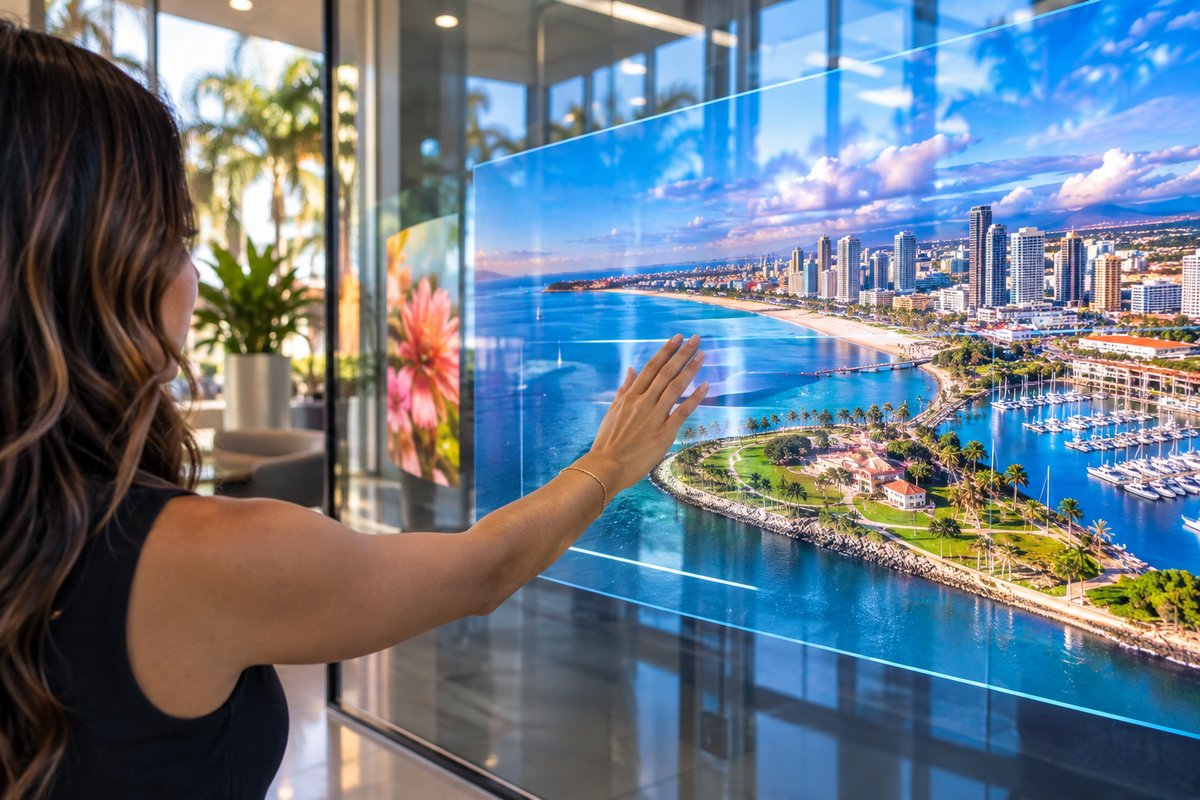
California · interactive glass windows and displays

Touch Foil for Interactive Storefronts & Glass – San Diego, CA

Bring interactive technology to San Diego glass—storefronts, touch tables, kiosks, and more—with transparent touch foil, from Screen Solutions International.

San Diego’s vibrant retail, hospitality, and design scenes invite constant innovation, making interactive glass a standout for engaging customers, guests, and visitors. Touch foil technology instantly upgrades any glass or acrylic surface—mounted from the inside—to a fully interactive touch screen. Whether you’re outfitting a beachside hotel lobby, a modern corporate entry, or a busy retail window on 5th Avenue, TouchFoil by SSI brings digital interactivity to your project, with seamless installation that preserves display clarity and transparency.

Designed for flexible use in year-round Southern California climates, TouchFoil can turn a standard window, kiosk, or table into a multi-touch experience using either a rear-projection film and projector or an LED/LCD display. Our ProFoil models suit everything from creative museum exhibits to high-traffic visitor centers, real estate offices, or educational displays in local universities. Quoted by project and tailored to size—with clear guidance on glass selection, local installation best practices, and regulatory requirements—TouchFoil is the trusted solution for San Diego interactive glass projects.

interactive storefrontdisplay designSan Diego tech

Interactive touch foil used on a San Diego retail storefront at dusk with people engaging.
Illustrative AI concept image, not a documented installation.
Plan your touch glass

How to Transform Glass with Touch Foil in San Diego

01 · Plan

Select Your Surface and Application

Identify the glass or acrylic surface you want to make interactive and decide whether you’ll use a display or rear-projection. Measure the active area for the touch foil and consider visibility and walk-up access in your location.

02 · Install

Mount the Touch Foil Inside

Wet-apply the touch foil to the clean interior of your glass, aligning the marked active area with your screen edges. Allow 24–48 hours for drying before final assembly of your system.

03 · Connect & Launch

Add Content & Go Interactive

Connect the included controller via USB to your computer, test the touch response, and launch your desired digital content. Fine-tune calibration and grounding as needed for high-traffic or complex setups.

Where it works

Where to Use Touch Foil in San Diego

Retail

Interactive Storefront Windows

Transform retail windows along Gaslamp Quarter or La Jolla with interactive promotions and catalogs, engaging passersby even after hours via touch screen through glass.

Events & Hospitality

Touch Tables and Kiosks

Enhance event venues, museums, or hotel lobbies by creating collaborative touch tables or interactive maps for visitors, fully integrated behind durable, easy-to-clean glass.

Corporate & Education

Interactive Lobby and Classroom Glass

Enable creative presentations and digital directories on glass walls in offices, universities, or visitor centers—supporting both multi-touch collaboration and display transparency.

Featured touch foils

Featured Touch Foil Products and Guides

Specs & Sizing

Touch Foil Sizes and Specifications

Find the right touch foil dimensions for typical San Diego storefronts, institution entryways, or public kiosks—customized from 10.1 to 100 inches and more. Consult sizing for retrofitting heritage or modern glass.

See Touch Foil Sizes and Specifications

Model Guide

Touch Foil Models

Compare ProFoil Standard, Pro Touch, Object Recognition, Clear, and Circular models to suit local needs—whether for a minimalist shop, round table, or interactive artists’ exhibit. Choose based on touch points, size, and display type.

See Touch Foil Models

How-To Guide

How Touch Foil Works and How to Install It

Read step-by-step details on mounting touch foil inside glass, maintaining touch accuracy, and integrating with your preferred display technology. Ideal for San Diego venues planning DIY or AV-guided installations.

See How Touch Foil Works and How to Install It

Get a Quote

Get a Touch Foil Quote

Start your interactive project in San Diego with a tailored quote. All touch foil solutions are quoted by project—size, model, and local requirements—so request details for your unique use case.

See Get a Touch Foil Quote

Local planning resources

Local San Diego Resources

Permits & planning

Permits and Approvals

Visit the city resource to determine if your installation needs building, electrical, signage, or event permits for digital glass displays.

Visit sandiego.gov

Links are to official or established local sources and were checked when this page was drafted. Confirm current rules with each office before installing.
Before you order

Interactive Glass Display Planning Checklist

  1. Confirm Glass Type and Location. Check that your selected glass is free of metal and thin enough for accurate touch sensing; metal framing is at least 3 mm away from the foil.
  2. Measure Active Area. Carefully measure the visible area you wish to make interactive and plan space for the touch foil to align with your display edges.
  3. Choose Display & Interface. Decide between rear-projection film and projector, or an LCD/LED screen, paired with the touch foil, based on the lighting and traffic in your San Diego location.
  4. Grounding and Cable Routing. Plan for a grounded power connection, securely fixed controller, and USB cables routed separate from display or power lines for stable touch functionality.
  5. Test Before Final Mounting. Temporarily fit and test the touch foil and display together on site before wet-applying, as installation is single-use and cannot be relocated once dry.
Touch foil mounts on the inside of the glass only, and custom sizing is available by quote.
Local Context

Using Touch Foil in San Diego: Climate, Seasons, and Venues

San Diego’s mild year-round weather and large coastal windows in retail, hospitality, and educational venues make the region ideal for interactive glass solutions. With abundant sun, glass is often a primary architectural feature—perfect for turning into interactive surfaces without affecting transparency or blocking natural light. Whether you are upgrading windows downtown, designing a beachfront lobby, or creating an interactive campus entry, touch foil seamlessly enhances the space without requiring changes to exterior facades or weatherproofing concerns, since it is always installed on the inside.

Interactive storefront windows invite engagement after hours in high-foot-traffic districts, while indoor touch tables and wall displays withstand frequent use at museums and event venues, typical for the city’s active conference and tourism calendar. Because the foil is always applied interior-side, there’s no exposure to ocean air, sand, or heavy rain, making it especially reliable for San Diego’s range of building and interior types.

With a variety of model sizes—from compact touch points for counters to large-scale systems for display walls or round tables—TouchFoil supports both custom artistic installations and standard commercial applications. Venues can attract attention during seasons like summer tourism or back-to-school campaigns, updating content as needed without hardware changes.

Preparation

Power, Permit, and Display Planning for San Diego Projects

Every interactive glass installation should begin with a review of local building, electrical, and, in some cases, signage regulations. For San Diego-based retail storefronts, kiosks, or event set-ups, consult the city office to confirm if digital touch displays require permits, especially those visible to the public or wired to building power. Indoor installations typically require less oversight, but rules may apply to large lobbies or event spaces.

For optimal touch accuracy and reliability, confirm your glass is non-metallic, with a thickness appropriate to the model—thin glass enables better touch performance, and double-laminated glass is supported by several ProFoil models. The USB connection should run to a grounded PC or player, with the controller securely attached to a grounded frame. Routes for cables should avoid parallel runs with power or display cords to prevent interference.

Plan the viewing angle, light levels, and digital content for San Diego’s well-lit, sun-drenched interiors, choosing projection systems or display screens that complement the venue. Rear-projection film from a sister site is an excellent match for large outward-facing windows, while LCD/LED is suited to high-resolution or smaller interactive spots.

Success Tips

Common Installation Mistakes and How to Avoid Them

Skipping a test-fit before final installation is a common error—since touch foil is a single-use install, always verify alignment and system operation onsite before wet-applying. This avoids waste and ensures full coverage of your intended interactive area.

Failing to account for nearby metal or improperly grounding the controller can cause reduced touch accuracy or unwanted interference. Maintain at least 3 mm spacing from metal glazing or framing, firmly ground the controller, and use proper cable routing techniques. These steps are especially important in large-scale installations typical to San Diego trade shows or university settings.

Some users overlook local code checks, especially for electrical connections and installations visible from the street. Checking with authorities early will ensure smooth permitting, prevent rework, and keep renovations compliant with local rules.

Ensuring that staff are familiar with touch system operation, calibration, and basic troubleshooting can minimize downtime during seasonal promotions or events, letting you maximize the benefits of interactive glass throughout the year.

Common questions

San Diego Touch Foil FAQs

Can touch foil be installed outdoors in San Diego?

Touch foil must always be mounted on the inside surface of glass or acrylic. While ideal for storefronts, lobbies, and interior glass panels in San Diego’s mild conditions, direct outdoor application is not supported. For uses such as outward-facing displays, make sure the location allows access to the inside glass for proper mounting.

Do I need a permit to use touch foil on my San Diego storefront?

Permit requirements depend on the size, placement, and integration of your display within a commercial or public setting. For most retail or public-facing installs, contact the San Diego development services office to determine if building, signage, or electrical permits are required.

What types of displays work with touch foil?

Touch foil can be used with rear-projection setups—combining rear-projection film and a projector—or with LCD/LED screens placed behind the glass. The technology allows touch sensing through glass up to 10 mm (12 mm for some models), letting you choose the display type based on space, lighting, and content needs for your San Diego venue.

How do I maintain touch accuracy after installation?

For best results, use thin, non-metallic glass and follow the recommended installation steps—precise wet-application, proper grounding, and USB cable management. Calibration features in the controller help optimize touch response. Test the interactiveness before securing the foil, as adjustment is not possible once the adhesive has dried.

Is touch foil compatible with all glass surfaces?

Touch foil is designed for use with non-metallic glass or acrylic surfaces. Some models support laminated glass (without air gaps), but not metal-coated or wired glass. Always confirm your surface type and consult the specifications to ensure compatibility, especially when working with unique windows or heritage building glass.

What warranty and compliance do ProFoil solutions offer?

Touch foil from SSI includes a 3-year warranty on the foil and a 1-year warranty on the controller. All models are CE and RoHS compliant, supporting regulatory needs for commercial, hospitality, and educational projects in the San Diego area.